The Life Autistic: Daughters are the Best Teachers

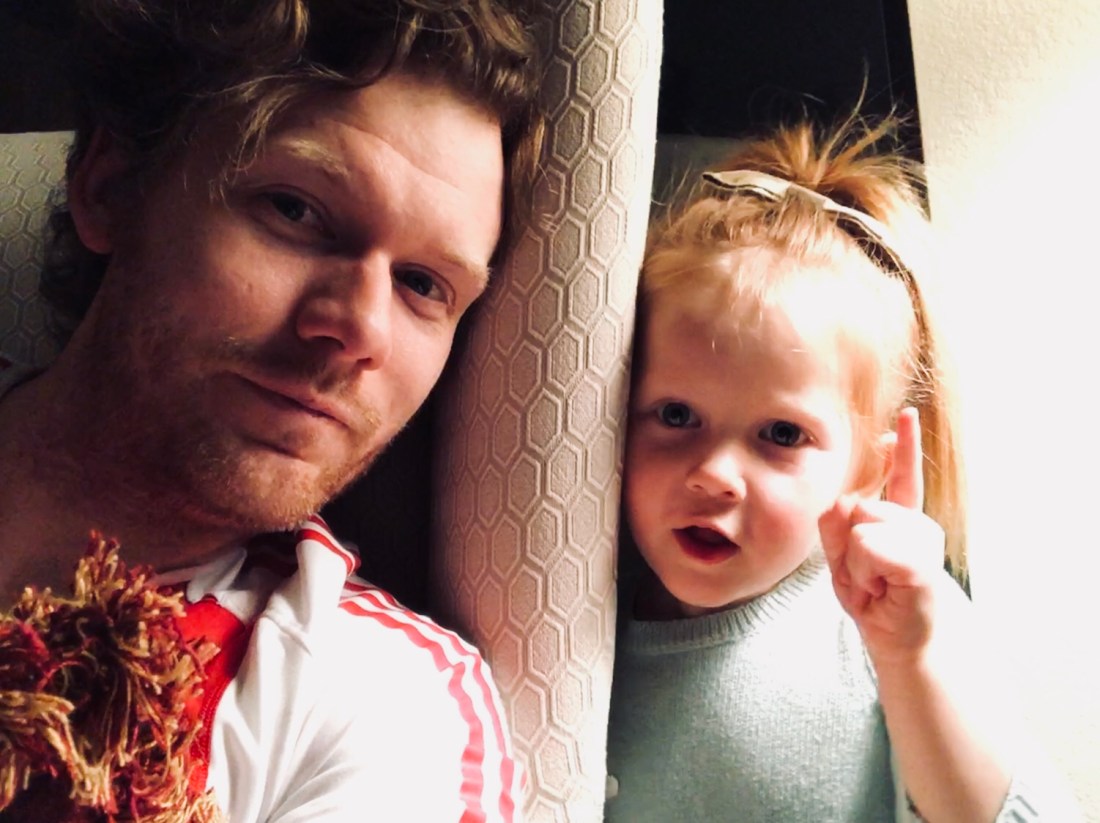
My oldest daughter, Mo, is an absolute delight and a total scamp, all bundled in a loquacious and vivacious ginger package. She has many of my best qualities (red hair, jokes, curiosity, verbosity) and few of my worst (stubbornness, cleverness).

I’ve enjoyed being a dad and a parent to Mo (and Zo, my newest daughter). Parenthood is a job all its own, where I’ve worked hard to be a loving example, fair disciplinarian, and patient teacher. But when it comes to teaching, there’s one area where I’m the student.

My daughter teaches me more than I teach her about emotional responses. 

When people talk “autism” and “parenting,” I rarely see instances where it’s the parent who’s autistic and working to manage their neurotypical kiddos. So let me share a story from that side.

My wife was distraught, openly weeping during dinner. As she poured out a little bit of her soul through tears, I was speechless. Not from shock, surprise, but just . . . not knowing what words to say. Yet without prompting, Mo reached out, resting her hand on Mom’s knee.

“Mom, is everything OK? I’m sorry.” 

Mo is two. And already she gets it at a level that I just don’t. She amazes me.

That’s just one example from the somber side. She’s dropped plenty from a happier side, whether noticing positive changes or making a timely compliment (“Mom, I like your long, pretty eyelashes.”). I’ve had to keep notes, since I need to use these gems at some point and win back a few trays worth of brownie points.

If you need an “emotion” teacher who can lead by example, doing what humans should do, responding with real people emotions: have a daughter

The Life Autistic: First Words

tattoo-credit-cards.jpg

I’m the oldest and oddest of five. But I think it took having babies #2 and #3 for my folks to realize:

“Yeah, something is up with Hunter.” 

I was an 80’s boy, pre-Internet, so it’s not as if parents were spoiled and ruined with a surfeit of information and misinformation back then.

How else would you have known if your kid was different

“Dad,” asked my youngest sib, Signy. “What was my first word?”

“Probably ma-ma,” he replied.

“What about Guðrún’s?” Older of my younger sisters. #4

“Probably ma-ma too.”

“What about Geiger’s?” Youngest brother. #3

“I’m pretty sure it was also ma-ma.

“What about Walter’s?” Younger brother. #2

“Sig, I don’t remember, but I think it was ma-ma as well.”

 “What about Hunter’s?”

Before Dad could respond, Guðrún answers with a bellow from the other room:

“THIS . . . IS . . . JEOPARDY!”

I’m reasonably sure those weren’t my first words. Maybe in my first twenty, perhaps.

As for my real first words, it depends on who you ask. My siblings don’t recall; they weren’t born. My parents haven’t disclosed or have expunged them from  the record. And my grandmother’s answer is either “Visa” or “Isuzu.”

Yes, you’re reading that right:

My first word was either ‘Visa’ or ‘Isuzu’ – so I’ve been told.

So how early can you really tell if your child is somewhere on the fabulous autism spectrum?

I don’t have the answer here, but if baby’s first words are in between “major credit card” and “Japanese automaker,” then I might urge some extra care.

For what it’s worth, I do use a Visa, but I’ve never driven an Isuzu.

And my own daughter’s first word? Dada. 

The Life Autistic: Episode One

Screen Shot 2018-05-10 at 3.12.43 PM.pngHi, I’m Hunter.

My story isn’t remarkable. Not yet, anyway.

I started working at 15, graduated from high school and left home at 16, and earned my Bachelor’s in English and in History before I was 21. I moved to Colorado on my own, married my college sweetheart not long after, and I got a job with Apple (corporate), which I’ve held and improved upon for nearly ten years. I own a house, I have a few friends, and I’m a ridiculously proud father to two lovely daughters.

And I’m autistic. 

That entire paragraph up there is normal (nay, expected) fare for most “neurotypical” people.

But I’m not one of those people.

“Normal” was never in the cards. Even what you’d consider “normal” achievement was and is abnormal for me – and many like me.

Given my place on the spectrum, I tend to the vicious end of self-criticality. So I’ve asked myself: “Who cares about this story?” 

You might care.

Maybe you have a child who’s just different. And you’ve thought about the dreaded ‘A’ word. And you don’t know how that difference pans out. Will they be independent? Will they succeed in life? Will they love and be loved? What does their future hold?

Maybe there’s an acquaintance who’s in their own world, and you’ve wondered—for a millisecond—what is up with them? Maybe you want to care, but you can’t quite tell if there’s something wrong with them or if they’re just, y’know, weird.

Maybe it’s an employee, boss, or co-worker — someone in your work orbit who’s off the typical axis. They stand out, sometimes in good and bad ways, and you can’t quite put a finger on why that is.

Maybe it’s your spouse, partner, loved one, and you’re not sure how much of them is “them” and how much is their autistic bent.

Maybe you actually know me. Or, at least you thought you did. Well, now you know.

Maybe you’re curious to hear about autism from someone who isn’t commenting from outside of it.

Maybe it’s you. You’re one of those “weirdos,” and someone else’s spectrum experience might be amusing and worth reading.

I want to turn embarrassment into embrace, ambiguity into clarity, and silence into voice. Autism is not a death sentence; it’s very much a compound-complex sentence, at times contradictory and labyrinthine, but always meaningful, profound, alive.

Autism is complicated. I don’t have all the answers.

But I do have a story.