Courage and Autism: Being “A Little More Brave”

IMG_5432.JPG

My oldest daughter started Kindergarten this week. She’d been excited all summer, up until the night before.

“I just want to stay home and be a baby a little bit longer,” she confessed.

I handed her the bottle I was using for Jo, the baby. She demurred. Being a baby doesn’t have the advantages she thinks it does.

But we talked about this transition, this pivotal episode.

I remembered my own first day of Kindergarten, as an undiagnosed autistic boy, whose precociousness and vocabulary would—my parents hoped—account for the myriad social struggles I faced at a young age.

The round, domed classroom had us all in quadrants, each in little collective groups of four, seated together under cold lights cascading harsh on muted colors.

I told Mo the story of how I wasn’t brave. 

The anxiety kicked in early. I was kicked out of preschool at first, so my organized schooling always began auspiciously.

I missed my parents, my routines; the alien environment began to creep into the loose-knit fabrics of my courage and unravel them.

But there was Irene.

Inconsolable.

Irene didn’t seem to be handling this well. I didn’t know her. But she was bawling, crying,   shaking. Her quaking little fear scared me. I didn’t know how to react.

It must have scared the teachers too – she was soon taken out of the class.

“I never saw Irene again,” I told Mo. “I don’t what happened to her. I wasn’t the bravest in my class, and I was just as scared, but I was just a little more brave that day.

A little more brave.

Did I know what I was back in Kindergarten? Did anyone? No.

Did I know I’d be facing some of the first of many challenges in my autistic childhood? No.

Did I ever think I’d share this story to my own future kindergartner? No.

Was I the bravest in this new little world? Hardly.

Mo did great; she’s amazing and far better at life at 5 than I was at 10. Typical neurotypical :p

I’ve come a long way myself — where even as an autistic adult, I don’t aspire to be the most courageous. Because I can’t. Or the most daring. I’d rather not.

So what’s the next best thing, to press up against the worrisome edges of anxious moments, to extend the borders of what I can feel is possible, doable?

Being a little more brave.

Courage is forged in the little things, even if they feel “big.” There’s a lot of little-big things in autism. To learn more about autism from an autistic person’s perspective, follow & subscribe to The Life Autistic here and on YouTube — or follow the more whimsical, spontaneous, and amusing content on Twitter / Instagram. Thanks!
 

Smiles on the Spectrum: Autism and Facial Expressions

IMG_2432.jpg

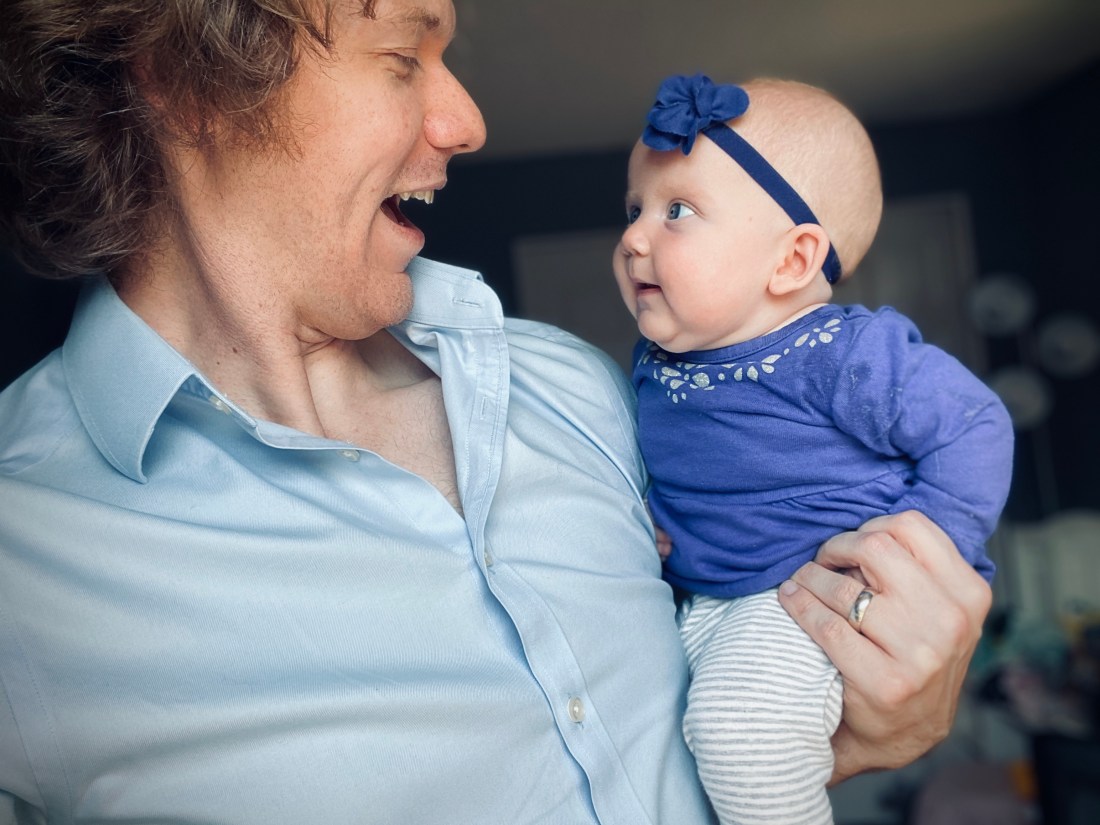
You can tell I’ve been practicing getting my daughter to “smile back.” It’s been a fun exercise, in some cases, literally.

It got me thinking about expressions in general.

People say you can tell if someone’s autistic by their facial expression or by this autistic look that they have.

That’s not really true. 

I’ve fooled plenty of people because they say I don’t look or seem autistic, but aye, if that ain’t another topic.

But since learning more and doing more with expression, I’ve discovered some strange and wonderful things about them and how they intersect with autism.

Speaking of doing more with expression, you should check out my latest episode of The Life Autistic on YouTube for proof!

For starters, smiles are inexpensive and easy. They’re unnatural for me (enough to where I joke on camera about “stop making me smile, it’s hurting my face”) and others like me, but not impossible. The fact that it’s almost always voluntary makes it powerful.

Chris Voss — one of my faves — showcases this in the concept of mirroring, and it’s been like a secret weapon for exerting a little tension on my side to erode it from the other side. So yes, neurotypicals, I’m using your “facial and emotional normality” against you to make my life easier 😉

We don’t always “face express” normally. Apparently, we can have a “facial” disconnect in emotional conveyance. I’ve had to almost practice a sad look, a disappointed look, or whatever other look (other than ‘dumb’) to consciously project that “this is how I’m feeling.”

Hunter, what kind of person has to do that?

Autistic people have to do that.

And it’s hard, because, well, when I screw up, and I feel bad, I don’t always look like I do. So you know how that goes:

“You don’t LOOK sorry.” 

“You SEEM like you’re OK with this.”

That’s hard.

I wish I knew why this was the case: I really don’t. We often come across in our own language and inflective variant, and that may be true in our unspoken communication too.

If you don’t know how we’re feeling, but you care — don’t try to read: ask.

And for what it’s worth: yes, it is fun to give my cheeks some workout to coax a smile out of a baby.

For a former frowner perpetual, I have a lot to smile about these days, even if I have to tell myself “SMILE.” To learn more about autism from an autistic person’s perspective, follow & subscribe to The Life Autistic here and on YouTube — or follow the more whimsical, spontaneous, and amusing content on Twitter / Instagram. Thanks!


It Must Be Done: What Autistic Routine Devotion Feels Like

IMG_5099.JPG

“Hunter, do you HAVE to do this right now?”

The answer is alwaysYes. Yes I do.”

This past weekend, I envisioned three goals:

  1. shave
  2. edit
  3. vacuum

That’s it. Modest items.

By the way: the second (edit) was a worthwhile, more involved effort, which I hope you’ll enjoy on The Life Autistic on YouTube. New vid this Wednesday, and you’ll see why editing made the top three.

But the first two (shave, vacuum) — they’re just such small, inconsequential things, right?

Not to me.

Autistically-influenced goals aren’t just “oh this would be nice to—”

No.

Imagine a hawk landing on your nest of a hairstyle, weighty and cumbersome, digging its talons into your skull. 

In those claws go, soon entrenched in the folds of your brain, clouding your vision, narrowing your peripheral vision. You don’t feel the pain; only the purpose.

Your heart beats, each moment pulses with a dread – you feel those delicate fibers of time slipping loose as they skip along. You’re no longer making the moment count; you’re counting the moments that you can steal away to do what your mind and soul have now become fixed to do.

If it’s not done — you tense, you feel those talons plunging in, and then the pain intensifies — you want the bird to release its grip, to let go, let you swivel your head unburdened.

But it won’t. Not until you’re done.

So that’s why I’ve a baby strapped to my chest while whipping a vacuum around my office.

The vacuuming had to be done.

Yes, JoJo was cranky. Yes, she needed attention.

BUT I HAD TO GET THE VACUUMING DONE.

HAD TO. 

I didn’t ask for the life autistic. I’d have enjoyed being dealt the kind of neurotypical attributes of indolence, “not caring,” flexibility, letting things go, carefree attitudes, etc.

So the next time you catch some autistic person who just can’t “pull away,” or “set something down,” or “switch gears” — imagine the hawk atop our head.

Interestingly enough, even this blog is a fixation of mine – if I don’t write, I get too stressed to function. Appreciate you reading; it helps! To learn more about autism from an autistic person’s perspective, follow & subscribe to The Life Autistic here and on YouTube — or follow the more whimsical, spontaneous, and amusing content on Twitter / Instagram. Thanks!