I’m Just Trying to Poach an Egg Here

IMG_4612.JPG

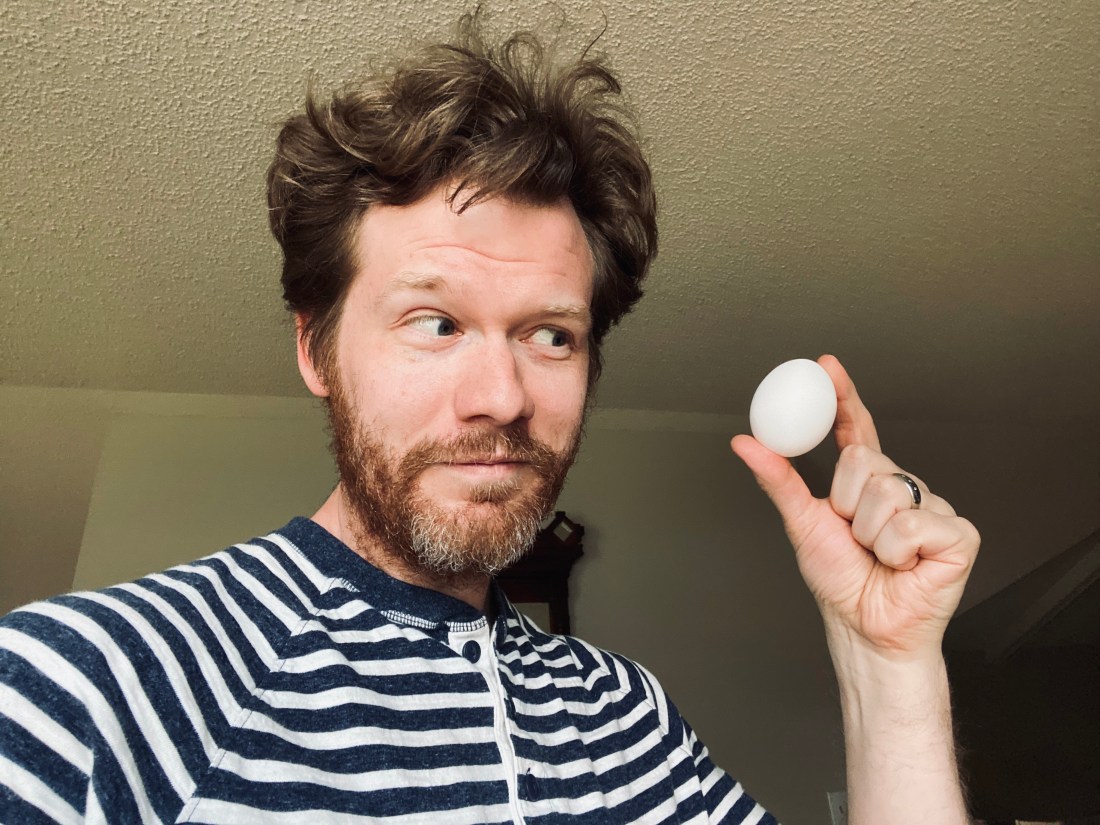
I’ve gotten incredibly good at poaching eggs. I can poach them better than most. I can poach them without custard cups. I can poach them better than Alton Brown (he cheats and uses custard cups, sorry).

The first time, I boiled the water and eggs over my pan and got angry. It took me a while before I tried again. This time, I chose to try. I’m autistic and resilient. It took multiple poaches, but I got this down.

Every morning, I poach three eggs.

I pour water into a small, shallow pan in which I drop a capful of vinegar. I use a spatula, and a slotted spoon, and I wait for a boil. As my water develops bubbles, I shoo those away with my spatula. I then crack my three eggs over the flat granite countertop and lay them into the warm water.

After I turn up the heat, I sneak the spatula under each of my three eggs, giving it some lift from that pan. They float in amorphous clouds. They poach until tender, oblong, perfect.

The other day, as I was cooking breakfast that morning, poaching three eggs, my wife asked:

“Is there any way you could make me a breakfast sandwich?”

I wanted to be able to say “Yeah, sure” but my autistic reaction is my core within my core. I tensed. I froze. I could feel my retracting in a way that drew back my shoulder blades and reared my neck back, like my body recoiled at the thought of violating what had been an otherwise precise routine of poaching three eggs.

Deep breaths. Willing my nerves to undo their fraying. Thinking twice before speaking. Finding some avenue that would somehow imbue this with grace.

“Andrea,” I sighed. “I . . . is there . . . what can I make you that will work with the ingredients that I’m working with?” 

I could only change this so much. Otherwise, I just couldn’t. 

I’m just trying to poach an egg here. Three eggs, to be exact.

In a stroke of fortune, she said she’d enjoy a poached egg with an English muffin.

I can do that, I thought. I’ll just eat two eggs instead of three. And I can make English muffins. Breakfast as usual, only less so. 

The eggs turned out perfect, yet again, as always.
Autistic People Literally Explain This – Are you Listening?

IMG_9644.jpg

Sometimes the hardest advice is actually the easiest.

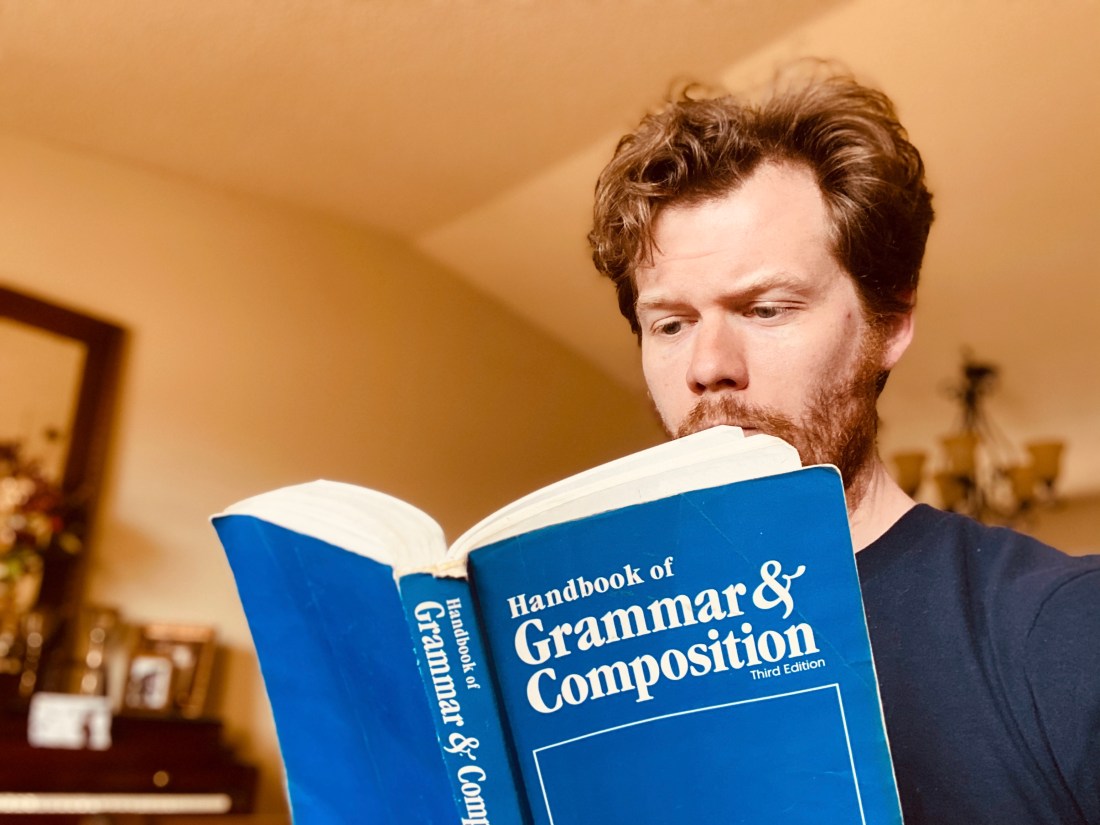
One class loomed large in my college course sequence: EN 360 – Advanced English Grammar & Composition. People spoke of it in somber tones, shuddering, recoiling at the mention. Even English majors failed it or barely passed it.

The survivors painted graphic pictures of the coursework: labyrinthine diagramming extremes, freewriting exercises that would cripple your hand, and a gargantuan “annotated bibliography” littered with technical traps and bedeviled details that would papercut the work into failing.

After enough conversations, brave attempts at small talk, researching ahead of time, a colleague gave me the absolute best advice on how to pass and ace the course:

“Just do it exactly how Dr. Chapman shows you to do it.”

This guy had to be kidding. It couldn’t be that easy. It just couldn’t. 

Next semester, for the course, I took Dr. Chapman (as recommended), the school’s resident grammatical and compositional authority, a genteel Southern gentleman, rigid-but-kind, proper-yet-warm.

My first assignment drafts? Trash. He wasn’t pleased. Then again, that seemed to be the consensus for all of us.

But as he started to walk us through how we could revise our drafts, I heard that advice clicking into place. Dr. Chapman walked through the assignment, and wrote out the very words, sentences he was hoping to see in our next drafts.

This. This was it. 

He wasn’t making a recommendation. 

He was showing exactly how to do it. How to rewrite the assignment. The words, the sentences, the sequences.

I wrote them down, word for word. It clicked.

And where the next drafts also suffered for many, they did not suffer for everyone. Because some of us were in on the secret. “He’s telling you exactly how to do it.”

So what does this have to do with The Life Autistic?

We’re telling you exactly what autism is all about.

We’re explaining the why, explaining how we feel, explaining our triggers, elaborating on the challenges of our autistic experience.

If “Understanding and Supporting Autistic People” were a course, you could ace it just by literally listening to autistic people telling you about autism. The more people try to overcomplicate it, to render judgment, to debate the experience, the harder it gets.

But better understanding autism through autistic voice is that easyIt would make your life easy! It would do wonders for us!

Not everyone listens. Not everyone seems convinced that our first-hand narratives are enough to overcome bias or pre-entrenched suppositions or other personal obstacles.

Sometimes it’s easier to believe less than the best, or that something you don’t understand is just “bad,” or that we’re just trying to excuse our faults away. Or that experts about us know more about us and don’t care or see the need to value our voice.

Those are the people who failed courses like Advanced Grammar.

Because it can’t be “that easy” or “that obvious.”

But it is.


Birthday Parties in The Life Autistic – Part 2

IMG_5155.JPG

Last weekend, I survived a birthday party. It’s nothing new, but it is.

If you know autistic people, then you know there are some easy, basic, common triggers to where it all “goes sideways” for us. Changes to routine, unpredictability in events, people, ambiguous plans, whatever.

After the party ended, Mo insisted we go to the afterparty — essentially just a free-for-all at the Denver Children’s Museum.

On the face of it, that wasn’t a bad idea. We’d been given admission thanks to the party hosts. But apparently, everyone and their tots also had the same idea that gray, chilly Sunday afternoon as well. Once more into the breach, I guess.

If you want a perfect storm of cacophonous, noisesome, exuberantly buzzing sonic pestilence, then I highly recommend a busy kids museum. It’s perfect, but:

Cramped spaces, scattered chaos, and constant loudness are major stressors for us autistic folks.

I leaned over, almost yelling in my wife’s ear: “This would have ruined me as a kid.”

But now, not so much.

*record scratch*

You read that right: I’ve found ways to cope with what used to be an impossible combo of stressors for me.

I’m not saying there’s a prescription, nor some strategy – just some benefit of circumstance, experience, and focus.

Here’s what helped:

Growing up loud. When I was younger, I’d start getting disconcerted and comment on how quiet it would get. As the oldest of five, there was always just noise. Siblings, activity, TV, something. Having the options to duck out and tune out was essential, but throughout life, bustle was my normal. It still wears me out, even if it doesn’t freak me out.

Have the getaway planned. We were only going to spend about 45 minutes at the museum, so having that set in stone was key. It’s not so much about the details of the plan – but that there’s a plan at all. That helps.

Being active, not passive. It’s like getting wet while swimming vs. standing near the pool: the difference is the intentional experience. My daughters were having a blast, but my youngest still needs supervising — it’s easier for me to “lean in” and keep watch and engage her (and Mo) and do my part to be a part of the noise, rather than let it splash me.

Find focused downtime. I can’t stay fully engaged forever, but I’ve found helpful “focused disengagement.” Near the end, we let Mo and Zo loose on the play kitchen. While most parents took that as a chance to bury their nose in their phones (hey, I’m guilty too), I knew I’d get distracted from that. So I watched the girls, interacting, cooking with their ingredients, following their paths around the kitchen, etching observations and just, I dunno, enjoying my kids playing? It gave me both enough to do without having anything to do.

We got home, and I got straight into cooking dinner.

“You did pretty well with all that, being you and all,” said my wife.

“Yeah. Yeah, yeah, yeah”, I nodded, shaking out excess party from my eardrums.

That’s good, because we’re doing this again next weekend. And the next. And the next.