Birthday Parties in The Life Autistic – Part 1

IMG_9551.jpg

I am now in the “children’s birthday party gauntlet.”

You may know the deal: where weekend afternoons are a carousel of venue and child and celebration of birthdays that sequence from party to party to party, with classmates you hear about and parents you’ve never really met.

It’s how it happens. It’s what you do.

This was my first of those.

Even for normal adults, it’s not the most ideal scenario.

But I’m not a normal adult.

Despite my cheeky snapshot above, I managed to survive and even smile through full-on kid birthday gauntlet fever in The Life Autistic.

Thankfully, I’ve got social survival skills:

Doing things. One of the other moms asked if she could help setup. Great idea, thought I, until I realized she took the one box of things that made for an easy task and left me, uh, nothing.

Finding a corner. That didn’t work. We were just late enough to where the corner/side seats were taken. Drat. Find a wall, find a wall. 

Chase my younger child. Mo, my oldest daughter, is as learned and practiced socially at 4 as I am at “older than 4,” but Zo is kind of a wily, todding, ornery, troublemaking baby. Of course, today, she was perfect and didn’t need corralling or chasing.

Well, those options disappeared quick.

Help.

Things eased up as “the process” began. When there is process, there is peace. Chaos, too, but at least it moves in a sequence: crafts, snacks, cake, cleaning, and more cleaning.

Thank goodness my wife was there, else I’d have been unmoored and adrift in having to solo it out with other adults. I can make the moments count, but I need a safe harbor.

So I did venture out once or twice.

When the kids’ dad himself got a plate of snacks, I overheard him getting chided for not announcing that “everyone was welcome to get food.” I can relate to that! So I ended up joking with him a bit later, remarking how “It’s like a pool party — someone’s just gotta jump in to let everyone know it’s open.” To my credit, I did not reference the arcane source: a pool party episode on Nickelodeon’s Doug.

Then when I noticed their grandmother laying out cupcakes on plates with sprinkles, I leaned in to ask:

“Oh, is this a decorate-your-own-cupcake thing?”

“It sure is,” she beamed.

“Ok, we’re leaving – it’s been great!”

For not getting sarcasm, I can sure dish it hot — we all laughed.

After cupcakes and controlled chaos, they announced that the Children’s Museum would be ours to explore for the next hour or so.

“Dad, can we go?” asked Mo.

The party quieted down in my head as I could hear the distant roar of hundreds of other kids throughout the museum’s floors, thinking back to the unending trickle of parents, children, escapees from the boredom of a Sunday afternoon, ready to burn off that excess energy here.

“Of course we can go.”

To be continued.


The Small Corner of Hope in my Autistic Experience

IMG_3425.JPG

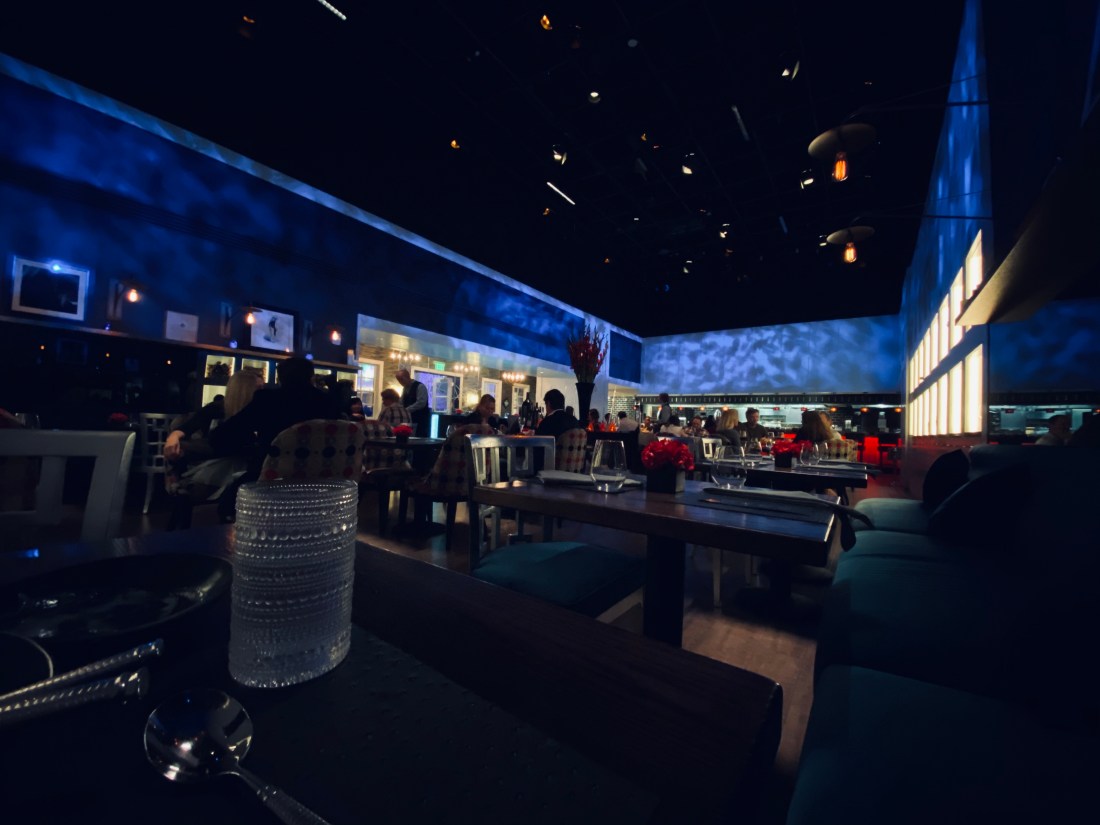
I took this picture from a secluded nook at Garrison, the nice restaurant enclave at Austin’s Fairmont hotel.

I’m a lone wolf’s lone wolf, and this trip I went four-for-four in dining alone and saving some social energy. Sure, it looks sad and can feel sad, but I’d rather that mild loneliness than just peter out and turn to dust and reduce myself to grave, stone faced catatonic jelly at a table with others.

Anyway.

When I set about The Life Autistic, I did so as this kind of redemptive, explanatory narrative.

But y’all, I am doomed. 

It’s not bad, but there’s nothing left I can redeem. I am who I am at this point, and breaking the bedrock of preconceived notions; it’s impossible now.

So why keep at it?

During my trip, I found myself using a code phrase to refer to my autism: “me being me” — it was enough to help ascribe things as unique to me, without letting on too much for those not fully disclosed.

But to that, I had people respond with another code: “Yeah, I read your LinkedIn.” 

People. Plural.

That was the signal.

In a mix of smile, bashful nod, and a hackneyed joke (“I guess people do read that”), it took the pressure off, where I could be more open in those moments. To share a little more about what makes me, me.

Even if I’m pretty much done and dusted in terms of what and how people regard me — autism or not — I still have one corner of hope.

The rest of the people you’ll meet on this Life Autistic.

The ones you don’t know yet. The ones you’ve not made up your mind about. Maybe you’ve never met. Maybe they’ve yet to be born.

For fearing my transparency, opening up about this, for so so long, I thought it’d do me more harm.

But it hasn’t. It’s done a little good.

I’m hopeful, because these conversations, this cracking open of an open door — it will do even better for others who follow.

They’ll meet more understanding, sympathetic folks in their lives.

People who learned just a little bit more about some rando’s autism experience, enough to color in the gray, to enlighten just a fraction more.

For those of you who do read, who notice, who endure reading the entirety of a post — thank you.

It may do me zero good in the end — that’s OK.

My corner of hope is that it will do more good for others like me. 

Autism Has a Daredevil Problem

Screen Shot 2020-02-22 at 2.30.20 PM.png

Think of when Netflix’s Daredevil was all the rage. Great show. Stellar choreography. Solid first season.

The hero, Matt Murdock: a blind man, yet super-attuned in his other senses, able to overcome that disability to where his other abilities could shine.

Now imagine people.

“I don’t think he best represents the blind community.”

“He’s only blind when it’s convenient for him.”

“Matt Murdock doesn’t speak for the REAL challenges among the blind.”

“He probably isn’t even blind at all.”

Think how patently absurd that is. But y’all, that’s believable. And I feel we can face similar challenges on The Life Autistic.

Autism has a Daredevil problem.

What’s a ‘Daredevil problem?’

It’s when autistic people overcome obstacles, adapt to situations, learn to mask as neurotypical, and articulate their experiences — to the degree that people don’t believe they’re autistic or don’t validate our experience on the autism spectrum.

What?

Yeah. Imagine that.

I’m not as severe on the spectrum as others are, but that doesn’t mean I cannot still voice where I am on the spectrum.

I’ve managed to overcome many social and interactive anxieties; that doesn’t mean they’re “100% gone” or “never existed” or that I don’t still struggle.

I can hold my own in conversations and keep an “almost charming” veneer, but that’s work and I deserve to speak to that work. I’m not invalidated by where I’ve built strength.

I explain how I feel; I’m not trying to excuse it all. I can keep myself from reacting poorly, from doing wrong, but I can’t change how things affect me and my soul: routine disruptions, closed spaces, ambiguities.

No. 

There are too many autistic Daredevils out there, who have managed, who may not be as severe, may not be those with the uttermost of need. We may even be totally independent, high-achievers, and *gasp* fun people.

But it is unjust to toss aside our articulations, our adaptations, observations, and our voice by dint of “accomplishment” and “success.”

Are you trying to imply that we can’t be…adjusted and autistic?

Not everyone among us can fight for us.

But we can.