How your Autism can HELP your job interview

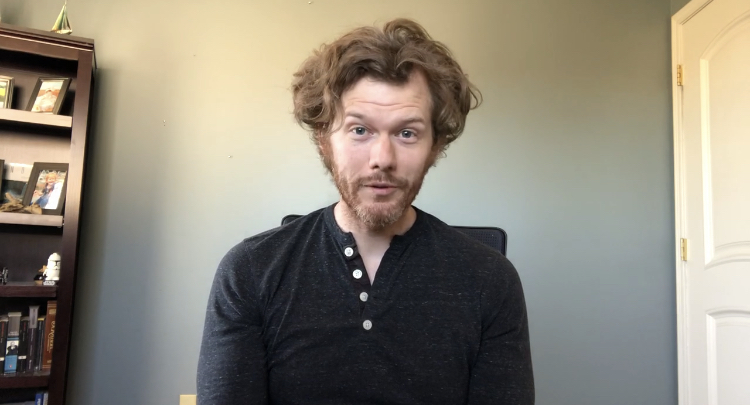
IMG_67B88BB0D5E0-1.jpeg

See what I did there?

That’s step one: don’t look at it as a handicap. You have a balance of skills that are at least getting you to interviews. You’re not alone. You’re not the first. Wherever you find yourself challenged in your autistic experience, you’re also finding it easier in other places too: pattern recognition, hyperfocus, lateral thinking — the strengths will help.

But I’ll back up for context here.

I’m autistic.

I’ve been interviewed dozens of times for several roles. I have interviewed others scores of times for dozens of roles.

I’ve been on both sides of the table. I’ve been good at both. I still am.

So I’m going to share a 360º, holistic view of the autistic interview experience and where you may find it helps your next job interview.

You know youThat’s the one thing I looked for in interviewers: How much can I learn about this person? I wanted to answer as many unknowns as possible, the key one being “Who is this person?” If you feel you have a tendency to overshare, set guardrails ahead of time, and practice sharing within the confines of the questions.

Interviewing can be your new enthusiasm. You know that interviewing is practically its own field of study at this point, right? It’s hard to “hack” your autism, but you’ve probably had some instances and obsessions about other subject matter — research, study, watch people, and practice like it’s your new domain of expertise.

You can surprise your interviewer. I was always impressed when candidates did their proverbial homework. That takes effort, focus, dedication, and a lot of predictive thinking. It’s not 100% going to get you there, but you may find yourself enjoying learning about your role, and if that’s enough to help your eagerness, it’ll ease tension and exude confidence in the interview.

You may have a helpful communication style. You may be autistic and loquacious or autistic and verbose: if you know which side you’re on, that’s half the battle there. The other half is practice. If you’re blunt, terse, then practice your storytelling, Ernest Hemingway-style. He was one of the best, and he didn’t use two words when one would do. If you’re verbose, practice trimming those florid buds into shorter soundbites. Tolstoy wrote brilliant short stories too!

You can brute force the process. It’s still one of my best helps, and I can’t encourage it enough.

You know, your interviewer is nervous too. Yeah, it’s true. I was probably more nervous when interviewing people, because I needed to make the right decision in a very short window. You’re honestly not alone.

You can be 100% yourself. You need to be. You want to work for someone who’s going to want you for what and who you are, not who you can project to be. We all polish up before an interview, get our stories straight, find ways to endure a little small talk, but be you. If someone takes you for you, then that’s who you want to end up working for.
“Oh, You Just Showered” – The One Thing You’ve Gotta Know on the Autism Spectrum

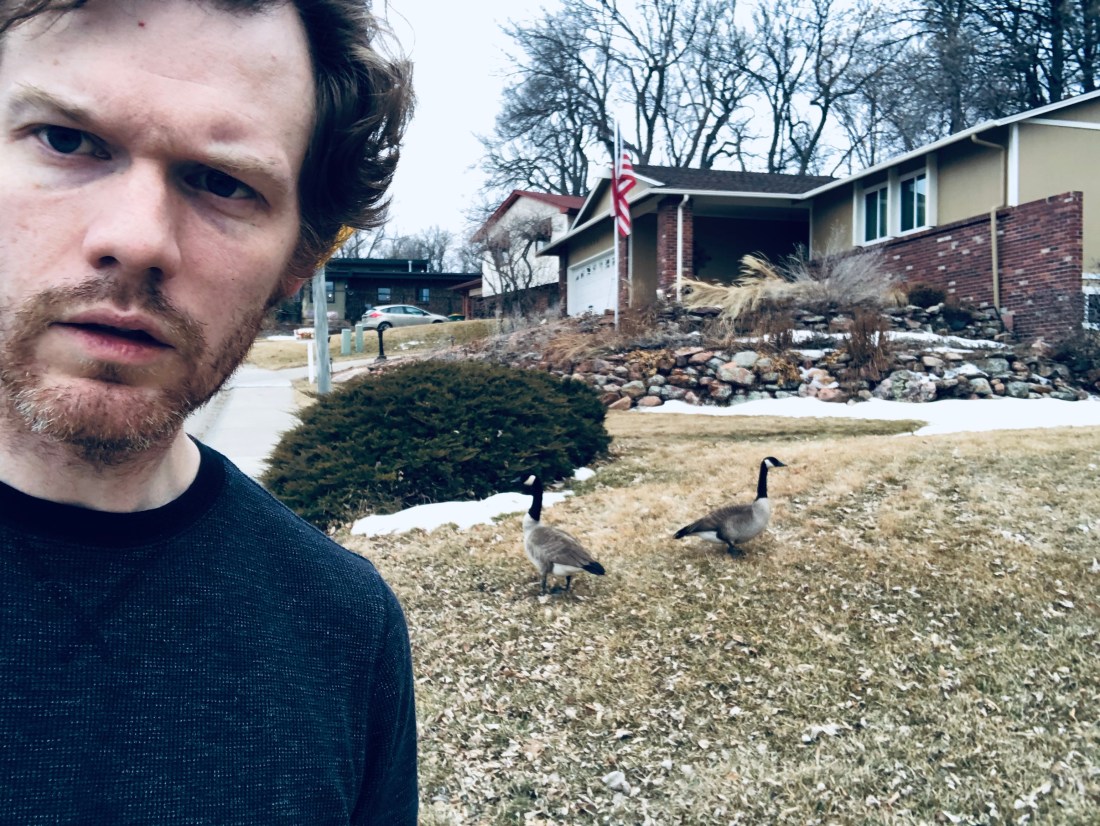
IMG_4216.JPG

It takes one to know one.

Being on and in The Life Autistic, I can pin down others on this similar spectrum. We know the quirks, the masking, the characteristics, the tells. You can fool others, but you can’t fool us.

But can you fool yourself?

I study and observe quite a lot, actively and passively. Since I can’t always muster the energy to interact, I just turn on the radar, watch, observe, make inference, and learn.

One day in a class on Sunday, I noticed another attendee who’s definitely like me. Much bigger heart. Tries a lot harder to socialize.

But he’s like me. It’s a little awkward.

There’s one key difference.

I know I’m different. 

And it may be a Plato’s cave thing or some other such pre-enlightenment state, but not everyone on the autism spectrum knows they’re different.

It’s not a good or bad thing. It’s just difference.

And when it comes to autism: knowing is half the battle.

As I “pick my spots” a lot more strategically during this class, I do a lot more watching. So I noticed this fellow; he came up to another lady in class, empathizing and apologizing for her loss. She’d miscarried a long while ago, and he’d just learned of it.

I knew too, but I could see him put the pieces together without really giving it much of a thought.

That’s bold, I thought. I’ve calculated every scenario in which I could express some kind of heartfelt sympathy, condolences, and there were no optimal outcomes that wouldn’t come across awkward. It was too distant. It wasn’t naturally in the convo.

This is one of those processes I’ve learned over time, and it’s why I don’t say half of what I’m thinking. There’s just no good way about it.

He then hugged her.

Ok, I thought. That’s really sweet. Again, not something I could pull off, but I know me.

And then his next comment:

“Oh, you just showered.”

Yep, that observation was 100% accurate, I noted. And this is why I don’t talk to anyone, ever, about anything.

Clenching my jaw to keep my smile confined only to the corners of my mouth, I realized that I’ve avoided a myriad of odd pitfalls with one crucial bit of knowledge.

I am different. 

I notice an insane amount of detail. My recall about people and the things they do, demonstrate, say, or don’t do and say is unnerving (to them.) I know these things.

But I know I’m different. So I know to do less with them.


That said, this fella — he might not know he’s different, even if I can spot it a mile away, and others maybe a few yards away.

But he’s kind, congenial, and everyone knows so.

Knowing is half the battle with autism. I’m still working on that other half.


We’re Done with Functioning Labels

Screen Shot 2020-01-25 at 3.34.12 PM.png

You may have heard the term “high-functioning,” or “low-functioning,” or “conjunction-junction-functioning” or whatever label associated with ‘autistic.’

And as of last week, I, too, had myself listed as “high-functioning autistic” here in my bio and About pages.

Not any longer.

This isn’t The High Functioning Life Autistic, it’s The Life Autistic.

Here’s why we’re due for a move away from these labels:

Their meaning is too ambiguous. Who decided at what point someone becomes high or low functioning? Moving out and living independently? Getting a job? Verbal ability? Social skills? There’s too broad of a spectrum within a spectrum to make this meaningful.

They diminish skills. I do feel for those of us on the spectrum, who unjustly and inevitably are binned away in the “low-functioning side,” as if that’s the totality of their being. It ignores the many savants or countless others who display plenty of function, even if it’s not “normal, societal” function.

They mask struggles. Just because people would consider some of us “high-functioning” doesn’t mean we don’t face considerable challenges and struggles that have helped us with this function. We don’t have Autism Lite™ — we are autistic, and not less so, just different.

They don’t account for functional changes. I’ve found the “high-function” label to be burdensome, because people except normality and adaptation 100% of the time. Folks, that just ain’t gonna happen. I’m still prone to shutting down, melting down, and stumbling in whatever functionality I can muster — and others more so. Functionality can have seasonality that goes far beyond the label.

They misrepresent the autism experience. “Oh, they’re one of those ‘high-functional’ types, so their experience doesn’t represent the general—” Whoa, hold up, no, negatron. We may have a greater or lesser experience within the spectrum than others might, but function isn’t negation.

Autistic is autistic.

I don’t need the extra labels.

If you want to learn more about “yeah, well, what kind of autism? Is it the kind where you remember the weather of every date but can’t button your shirt?” then you should just learn more about me.

About each of us.