Autism: A Different Kind of Cool

flat,1000x1000,075,f.jpg

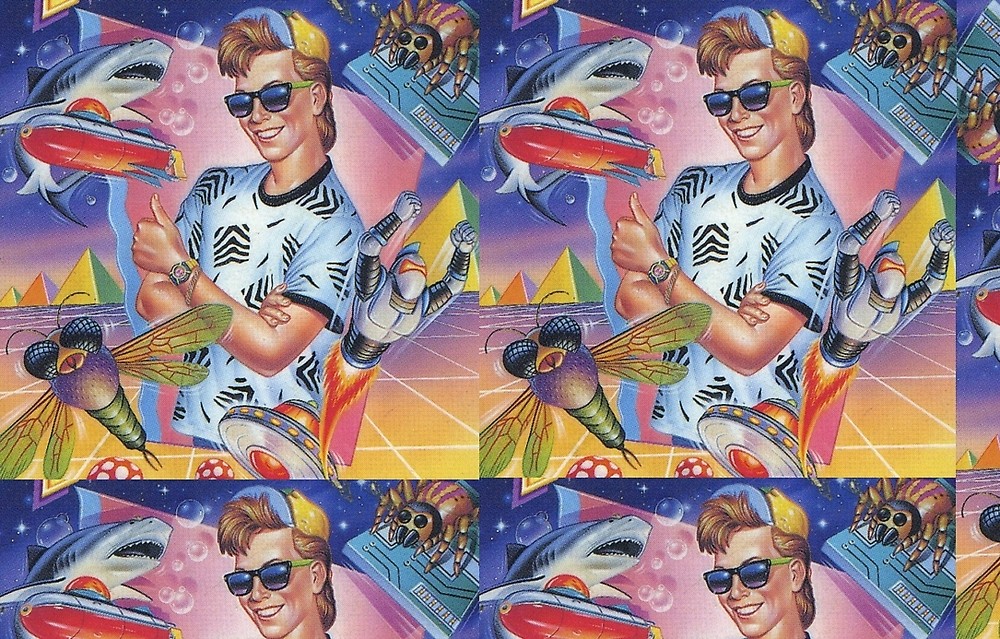
I misspent my youth pursuing a mythic swagger, the kind of 90’s aura that exuded confidence, often styled in baggy clothing, large sunglasses, maybe a mushroom haircut — the absolute zenith of what one could be:

Cool.

I sought cool — the intangible unobtainium — working with an earnest passion, but with a maladroit, inexpert approach. Cool was at once effortless, but effort-laden. You couldn’t pull off cool without putting it on.

Without being able to figure out how to do cool, I couldn’t be cool. But I pretended. Fabricated. Dreamed. Even my WWF-fueled enthusiasms at the time shaped my imaginary character: King Cool — WWF Champion, who epitomized cool.

And I don’t even know what made him cool. He just was cool.

I didn’t know I was autistic then, but I knew I wasn’t cool.

I was more Screech Powers than Zack Morris, only less social. The wrong kind of different.

After retreating to and cultivating a niche set of tastes — some palpably bad (Gundam-emblazoned Hawaiian shirts), some presciently good (Dragon Ball Z, electronic ambient music), some just bizarrely dated or transient (game shows, Beanie Babies) — and having little else but to double down and just lean into the things that I enjoyed, I gave up on cool.

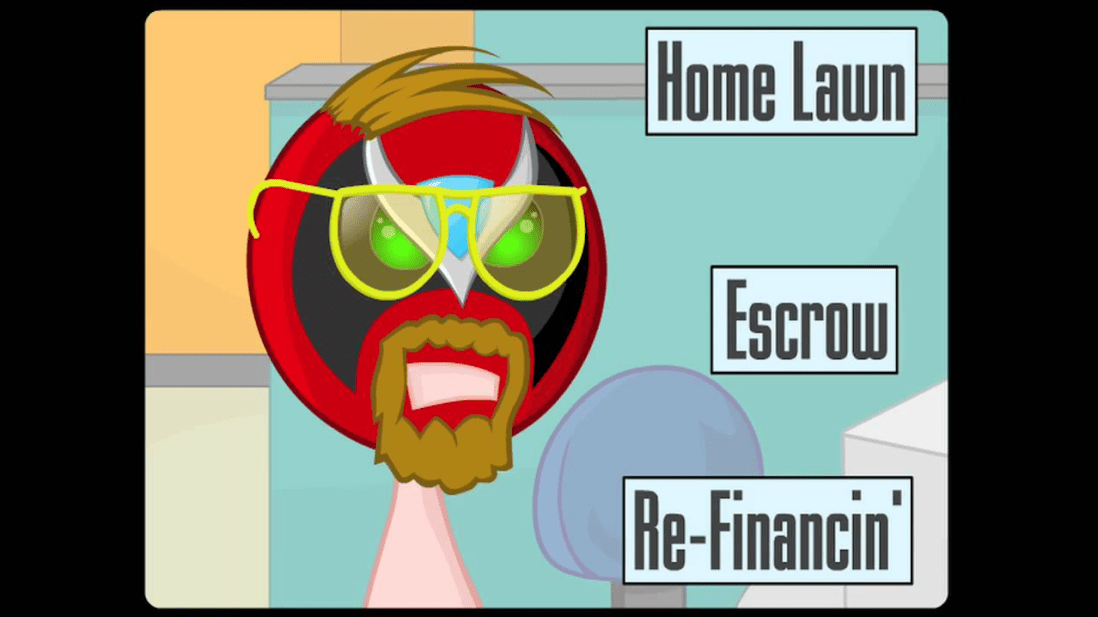
Until I thought about a legend of character: Senor Cardgage – a bizarre idol of a different kind of cool.
Screen Shot 2019-11-02 at 9.59.50 AM.png

That’s the best I feel I’m going to do in The Life Autistic, to obtain that different kind of cool.

To where I imagine I’m sitting at a table, languidly working down a water glass, and someone brings up a little-known yarn about me.

“Hey, so I you worked for the State Department when you were like, fourteen?”

And I’d set my glass down, sigh in a way where they’d know they’d uncovered a secret about me.

“I was fifteen, and it wasn’t quite the State Department, but —”

Or someone remembers the one time I emailed out a playlist of songs that overlapped with zero other peoples’ taste.

“Hunter, on what planet do you even find the genres for the stuff you listen to?”

And I’d chuckle.

“I was an old hand in the underground electronic scene, and I had to be dedicated, trying to get 9-minute drum’n’bass tracks off a shoddy dialup connection overnight.”

Through manifold enthusiasms, obsessions, growing up living life with a different mind, using big words that put me in different company, holing up to carve out my own interests and depths, navigating rough social sands before I even knew autism was a thing — I never became cool.

But I found the different kind of cool.


Making Difference Great for Once

Screen Shot 2019-10-27 at 3.05.39 PM.png

After barely a minute of social media scrolling over the weekend, I came to the realization that I’m probably the only person who doesn’t go to Halloween parties as an adult. 

Which, great, check another one for me in the ABNORMAL PERSON box. It’s a pretty full list at this point.

After a while, if you’re on The Life Autistic with me, you’re probably discouraged from time to time about difference. 

We want to be accepted and valued for our differences without having to “fit in” and lose our difference.

“But Hunter, you’re—”

No, lemme just stop ya there.

No one’s thinking “Oh, look at that dude opting out of parties like a cool guy, prioritizing his health, ensuring he’s not putting himself in a spot to look like an idiot” — no.

Or “Look at that girl’s radical and non-traditional interests; I wish I were different enough to not feel I need to follow a trend” — no.

No one sees my borderline odd routines and rituals (screaming early rising, mid-day workouts, unvaried eating habits, scheduled work blocks that have to start on the hour or half hour, etc) and thinks “Man, this guy practices the unlocked secret to efficiencies and gets it done!” — no.

If you’re considered weird and different, then your actions are weird and different. Welcome to The Life Autistic!

I could campaign around ‘Make Difference Great Again.’

To the fella who can’t be bothered to be dragged to a party, instead of  ‘lame,’ ‘anti-social,’ and ‘boring,’ why not ‘image-conscious,’ ‘selective about experiences,’ and ‘confident enough to value time alone?’

To the gal with the niche interests, maybe less of the ‘offbeat’ and ‘weird’ and more ‘unashamedly bold in taste’ and ‘an individual, only more so?’

Personally, I’d love hearing less of “inflexible” and “rigid” and more “efficient,” “diligent,” and “thoughtfully tuned,” but y’know, I can’t have everything.

Difference stands out, but does it stand tall?


Rituals Liberate Creativity: How Autism Enables Problem-Solving & Artistic Output

IMG_8190.JPG

A while back, one of my data scientist peers expressed how surprised she was at one of my satire ventures.

“How do you do that?” she asked.

“Do what?”

“Come up with some many things to post — you do that so often, I wish I were that creative.”

I mulled on that for a while: am I really that creative? 

By my own reckoning, I might have a clever idea or two once in a blue moon-in-a-half. But others seem to think I can spin up a decent thought, piece of writing, not-so-dumb-solution, or whatever.

After reading Michael Hyatt’s Free to Focus, I was jolted by a concept he mentioned:  rituals liberate creativity.

In essence, the more of your day that you can delegate to ritual, the less of your brainpower you’ll need to use to “do your day.” And where can that brainpower go? Creativity.

It’s the same concept that gives you those great “shower thoughts” — you’ve put everything on hold and on auto-pilot, so your mind is loosed for more lateral thinking and moonshot ideas.

So what does this have to do with autism?

Our autism can lead to significant ritualistic behaviors, so there’s ample room for creativity.

Granted, it’s not the case for everyone — executive function and other challenges can end up be overwhelming.

But for others, our autistic attributes accelerate problem-solving and creative endeavors, like our efficiencies gained in rituals, hyper-acuity, perception, pattern-recognition, detail-obsessions, and more.

Temple Grandin is probably the best example, whose work in livestock and animal welfare is informed and accelerated by her unique and uniquely perceptive view of the world around her.

I’m hardly the world’s most creative person, but I still manage to run with ideas on this blog, visual design and branding at work, rural satire, photo composition, social media narratives for a non-profit, and given enough time, fiction(!). There’s a lot of output there!

So yeah, it’s weird that I can’t go back to work unless the bed is made or my sink is clear or after I’ve checked off a few key deliverables every morning, but there is not much that gets undone in my life on a day-to-day level — and those rituals free up my mind for its most creative.