The Life Autistic: Is this just a ‘human thing?’

Screen Shot 2019-05-02 at 4.42.20 AM.png

When you’re abnormal, you just don’t know what normal is.

Sure, that seems like an obvious fact, but here’s how it complicates things:

I was complaining to talking with my other boss, sharing how I hated feeling like I had this strange, weirdly deviant need for at least some affirmation on my work. I was reassured:

“Hunter, I think that’s just a human thing.”

“Yeah, but I wouldn’t know if it’s just a human thing.”

The Life Autistic is this translucent bubble, to where my own experiences, joys, and ires are all within the lens of things human, cyborg, robot, and straight up autistic.

For example, I get unusually giddy about the BattleBots show, and I’m almost ritualistic about scouring the BattleBots Reddit afterward.

My Fridays in summer just aren’t complete without it.

And that seems weird, a little unusual.

But then I discovered that’s actually kinda what BattleBots fans do, autistic or not.

I never really know. I try to know. 

Quite often I just don’t know what parts of me are the autistic experience and what’s just part of being a normal human.

I’ve been around a while, thought. Survived this long.

Sometimes you just see enough of life to understand what ‘normal’ should be.

The other day, I was told a story:

“I had to cancel on someone because of my birthday. So Hunter, knowing that, what do you think the normal, human response would be?”

“Oh, something like — ‘Oh, happy birthday then! Hope you enjoy your special day; we’ll catch up later?”

She sighed.

“YES. Of course, that’s what a normal person would say!

Imagine that, me knowing the ‘normal person’ response.


The Life Autistic: Living with Obsessions and Enthusiasms

Screen Shot 2019-04-28 at 9.21.24 AM.png

I used to be a strange boy with strange obsessions.

I still am, but I used to be, too.

It can’t be helped. It’s one of those markers of The Life Autistic, where you just hyper-obsess over something arcane, mundane, maybe a little odd.

For me, it was many things.

Cameras. LEGO sets. Beanie Babies. Watches. Chess. Left Behind books. Countries.

But the strangest of all: Who Wants to be a Millionaire.

I don’t know why. I never know why.

But back in WWTBAM heyday, I delved into the minutae of game shows, contestants, record winnings, facts about the show.

Rarely the trivia though.

That’s kind of the thing: back during my camera fix, I didn’t care much about photography, but rather makes and models and variants and formats of camera.

And for Who Wants to be a Millionaire, I picked up some good trivia skills, but only as they related to things like “One-Day Money Records on Jeopardy,” or “Answers Worth Over a Million Dollars on Game Shows.”

I had hopes, too, that I’d be the first winner on Kid Millionaire, a show that didn’t exist.

So what are the autistic obsessions and enthusiasms like?

Imagine being compelled to learn every single thing, every detailencyclopedically broad, expertly deep on the most impractical aspect of a subject.

Say it’s math. 

But not, like, “doing math,” but learning about its history, functions, luminaries, formulae, theory — and then stumbling when it comes to working out a differential equation.

It’s as silly and unhelpful as it gets when it comes to a functional subject.

That’s The Life Autistic.

So yeah, I can tell you that Dan Blonsky was the 2nd winner of Millionaire, or that Rahim Oberholtzer was one of the youngest game show millionaires, which he won on a short lived revival of Twenty One.

But throw me in a quiz bowl and I’ll probably drown. Unless the topic is Game Show Facts, Trivial and Arcane

Oh yeah, that’s a signed copy of TV Guide from Regis Philbin himself.

The Life Autistic: We’re Great at Anomaly Detection (but that’s Terrible)

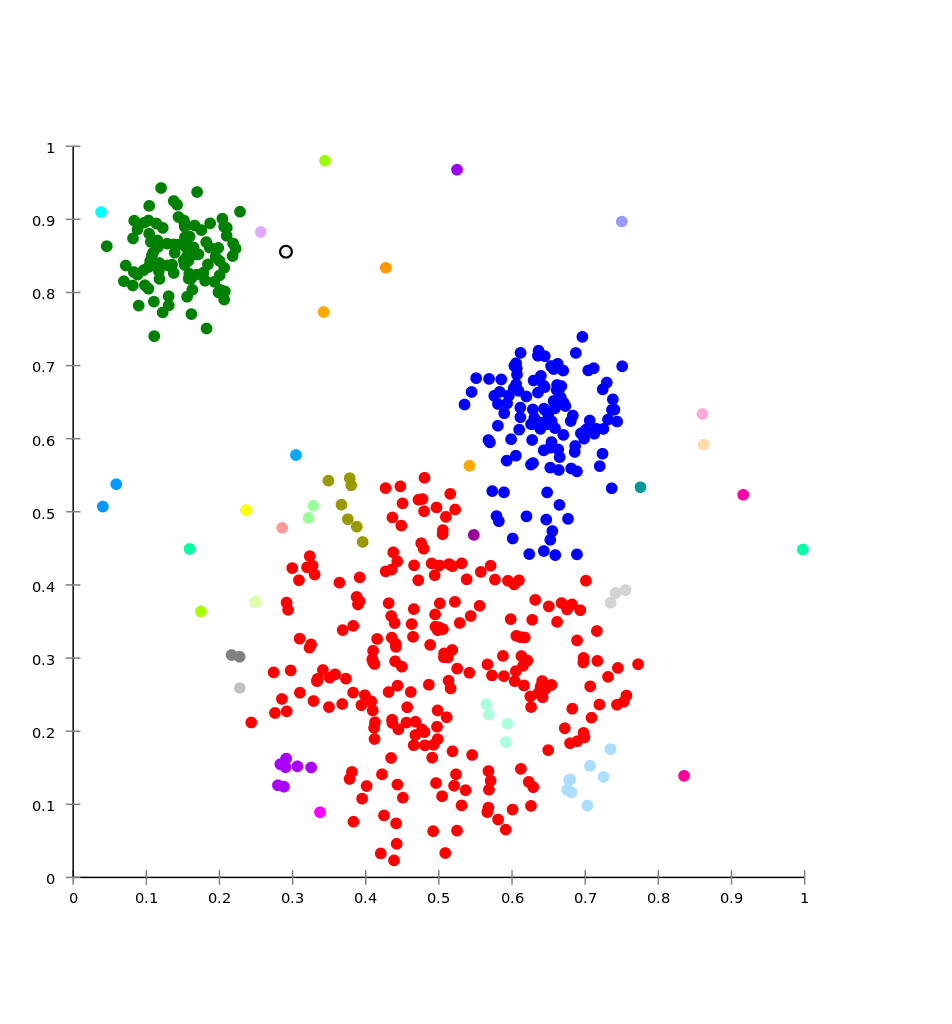
952px-SLINK-Gaussian-data.svg.png

If you thought anomaly detection was just a data science thing, then you need to meet more autistic people.

We’re great at it.

And it’s TERRIBLE.

I hate it. Hate. Hate. Hate.

But why?

So, we autistic folks are precociously good with patterns, routines, repetition — if it’s something predictable, recurring, then we bake it into the landscape as if to help us answer: “This is what normal looks and feels like. These are my signposts. This is how I know.”

Oh, I’m sure you’d love the power.

The ability to step into a day and notice that something’s . . . different. Off. Abnormal. Anomalous.

Like the one hero in the bunch who smells that something fishy, almost like a preternatural power.

Sorry folks, but that strength doesn’t get us the cool looks from others with us.

Not even close.

Here’s why it’s a terrible skill.

Why.

^

Just that.

Why.

Why is this different? Why does this atmosphere feel so off? Why is this person different today? This week? Why did today seem so awkward.

We know something’s up.

We can sense it.

The peril is rarely knowing why.

People don’t tell us. Or worse, won’t tell us.

Situations don’t unravel.

Not every pattern deviates with purpose.

The anomalies in our environment are cruel: obvious but unrevealing.

Ignorance is a bliss, humming from day to day, interaction to interaction gleefully unaware.

Not in The Life Autistic.

Where we sense the changes, pick up the imperceptible, detect the anomalies.

And get no answers why.