The Life Autistic: So I Wouldn’t Make It in the Air Force?

IMG_7770.JPGMy wife is fond of joking, “Hunter was a Navy brat. Now he’s just a brat.” I don’t object, as it’s quite true.

As is the case with many military kids, we often consider joining the service ourselves.

But apparently, that would have been a bad fit for me.

Could I make it through basic? Eh, probably not. Could I survive wearing those big goofy glasses? Not likely.

Beyond that, there was something more fundamental and situational.

I remember frustrating my dad to no end growing up. He was quick to point out my skills, but I tended to get in the way of my own potential.

“Hunter,” he said, “you could be just about anything you want! A lawyer, a doctor, an anesthesiologist! But — not an Air Force pilot.”

“Why not?” I asked.

“Because you always have to ask why.”

He clarified:

“When you’re flying your jet, and you get that order to EJECT, EJECT — you’re not going to have time to say ‘Gee officer, why do I have to eject?’ There’s nothing wr—’ and then BOOM!” he exclaimed, “you’re hit by a missile.” 

It’d be some sweet irony to write this and say, “Well, hah — I’m a Lieutenant Colonel in the Air Force with over 200 sorties flown—”

No.

It’s always mine to question why.

That mindset doesn’t always fit everywhere.

I’m far from a rebel – I mean, I survived four years of Pensacola Christian College of all places. But I’m not always a rule-follower either.

I’d like to say I’m just unnaturally curious, but I’m too lazy for that.

There’s a different sort of autistic slant.

We’re quick to question logic — we need things to make sense.

I know that’s not the way the world, society, people always work. But the autistic mind rests in understanding, putting pieces together — if they fit, then that helps dispel so much objection, reaction, and question.

There’s a world of difference between “I’m not sold, but I see the logic,” vs. “I don’t even understand the intent here.”

I’m always one to make reply,
And never cease to reason why,
Theirs but to do and (try not to) die (if I don’t have to)

And for what it’s worth, I could always fly commercial airliners. Not like I’d need to rationalize ejecting out of one of those . . .
The Life Autistic: Things You Need to Know About MELTDOWNS

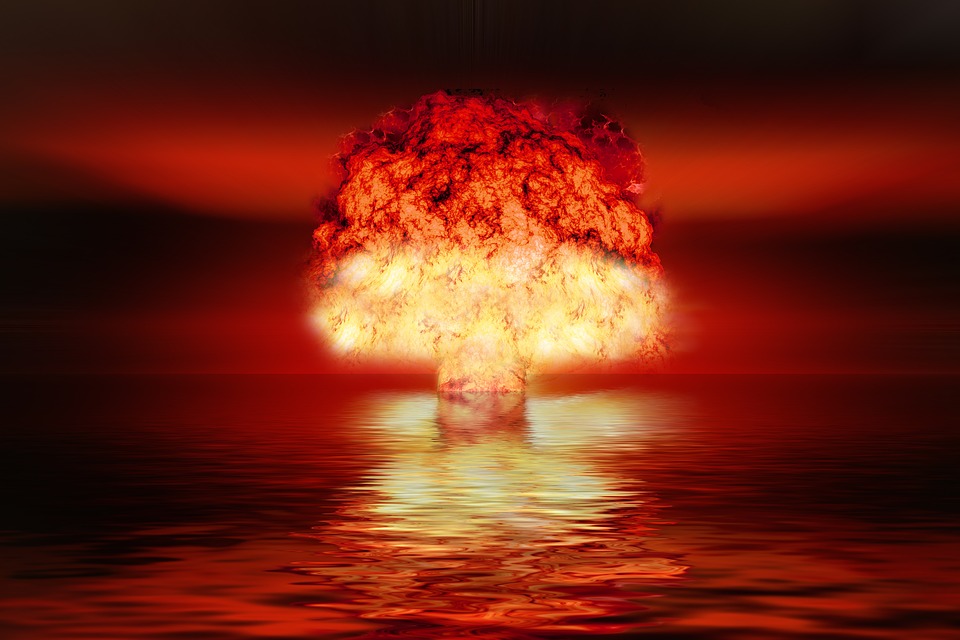
atomic-bomb-2621291_960_720.jpgPictured: Me, after more than an hour of forced socializing in cramped quarters

Meltdowns are not tantrums.

Remember that phrase. Recollect this comparison. Recall the equation.

Meltdowns are not tantrums.

“Wait a minute, H2, I thought we were getting some quirky, offbeat story about you like usual, like how you broke down after your parents moved away while you were at summer camp?”

You’ll get that story.

But this is important. Your autistic kids need to be spared the ignominy of misunderstanding. Your autistic acquaintances want you to know the difference.

Tantrums are an explosive reaction, an output to an unfulfilled input. 

When I was younger, I remember finally getting the chance to go out for Indian food in Reykjavik, something I’d been looking forward to for years. That was the plan.

Until, due to whatever-the-heck-probably-something-stupid, it wasn’t. We ended up going for McDonald’s at the Kringlan, where I sulked, whined, and griped all the way through a meal that topped the Big Mac Index (no lie!)

I didn’t get what I wanted, and I pitched a fit. That’s a tantrum.

Meltdowns are either explosive or implosive, a response to overstimulation that defies consolation. 

For starters, I’m going to shout-out to all the parents who have kids who melt down.

These are hard. 

They’re stressful, embarrassing, and the stares you can feel from behind your back — I’ve only small words of comfort that I hope will apply:

This too shall pass.

But let me share what it passes on to.

After my promotion to “Big Boy Manager Job” at Apple, I joined the other organizational leaders in the group for a summit out in California. First time traveling. First time seeing so many of my extended peers at once. 

On the third night, we all went out bowling. It was a blast, we had fun, other people had drinks, and I pulled out all the stops to be just as social and cool as everyone else.

But after about an hour, I ran out of gas. Folded. Catatonic. Zombified. Shot. I just . . . couldn’t anything anymore. People are exhausting. Firing on all cylinders just to keep up with the malaise, cacophony, I could only maintain for so long. I don’t see how you neurotypicals do it, all told.

I melted down to a sedate, sullied, burnt husk of a man, utterly spent, like a robot who’d lost its charge.

As I sat in the chairs at the bowling alley, pitcher of water all to myself, sipping away aimlessly, a Senior Manager caught my thousand-yard stare and cocked her head.

“You OK?”

“Yeah yeah,” I nodded.

See, I’ve learned a bit about meltdowns. They’re far less violent now. The fuse is longer. The combustion is more of a slow burn, cratering in the chaos. Not a bang, but a whimper.

I’ve outgrown the explosions, but I’ll never escape the meltdowns.