
How Autism Works in My Favor – If You Can’t Be Remarkable, Be *This*

“Hunter, do you mind if I ask you a question?”

It’s not often that I’m surprised — not because I’m “good” at predictions or smart or whatever. I just spin my autistic gears enough to map out the spectrum of human variables, and by and large, people just don’t deviate enough from their norms to dot my radar as an outlier. And that’s good; sometimes my autism works in my favor.

But that question surprised me.

I’ve made an over-practiced art form of interviews – whether it’s for jobs or informational sessions. For the latter, I never expect people to ask questions of me. Like, I’m the one who’s looking to learn — what could possibly be worth asking about me? 

“Wow, uh, sure?” I said.

“Do you always wear clothing with your initials on it?” she asked.

I laughed and looked down: I’d been wearing my Helly Hansen® vest.

“As I’m fond of telling myself,” I replied, “if you can’t be remarkable, be memorable.”

I’m not remarkable. I can’t get by on skills alone. I’m really bad at a lot of things. If I talk without a pre-planned agenda in mind, I unspool after five minutes. I’m well outdone by many in terms of capability. I’m doing the best I can at the table being dealt a 7-9 offsuit hand.

But I can be memorable. 

Autism works in some oddly beneficial ways at times. We’re different out of the box. We’re going to sound different, use different words, think in strange and different ways. We’ll communicate in a way that won’t sound like others.

People remember different.

Since I stopped caring about fitting in, I’ve doubled down on fitting out. I grow out my hair out because it’s a conversation piece. My word choices and diction are unlike most others, to the point where I can’t write “example copy” anymore, because people know it’s mine. I have the coolest custom email alias at Apple. I wear my Helly Hansen® attire because people either recognize the brand or they think it’s because of my initials.

I’m not an autistic savant. No one is going to notice me for prodigious feats of memory, skill, or formidable intellect.

But I am different, and that’s memorable.

What’s memorable to you?


Oh, by the way: thank you for taking a few minutes to read this post. You could have spent that time doing something more enjoyable, but you chose to read this blog, and that means a lot. If you want to learn more about autism from an autistic person’s perspective, follow & subscribe to The Life Autistic – or follow the more whimsical, spontaneous, and amusing content on Twitter / Instagram. Thanks!
“Greasing the Groove” for Autistic Strength

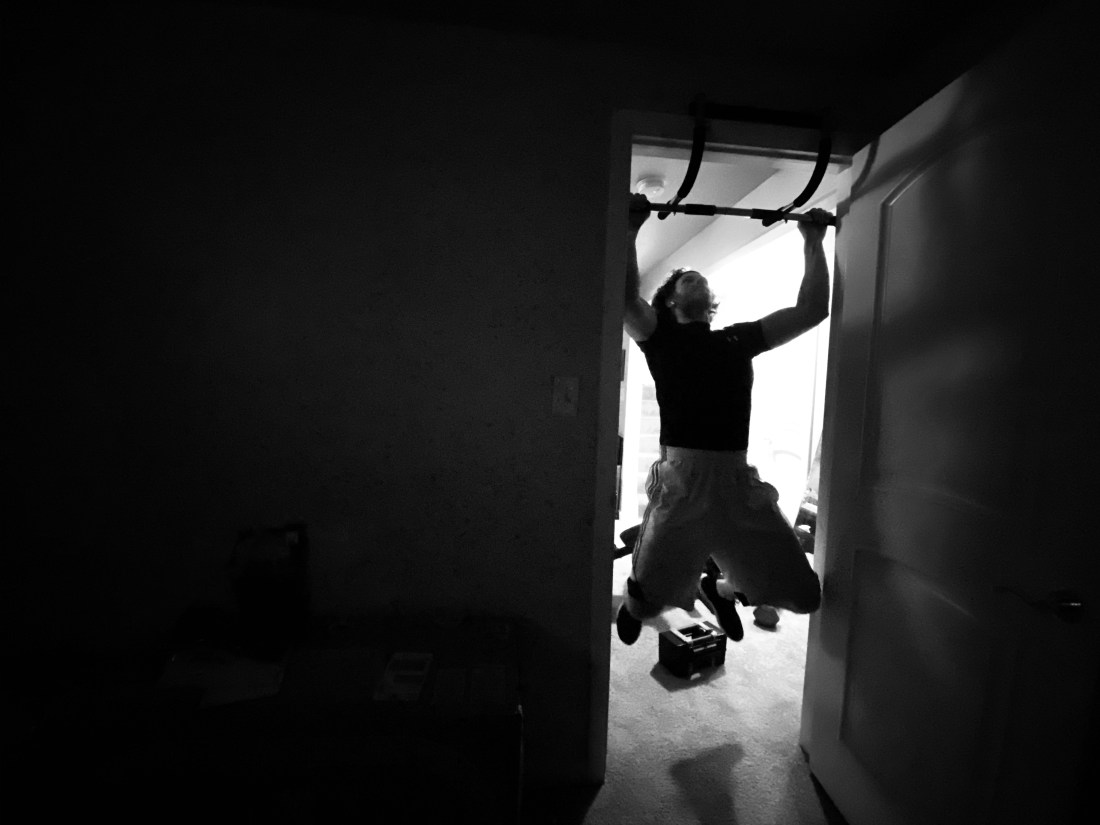
My family holds a pull-up contest every Christmas Day. I’ve never won.  Last year, I only cranked out four and embarrassed myself. The most pull-ups anyone has done to win was ten.

This year, I’ll be doubling that and embarrassing everyone else instead.

If there’s a “one easy trick” gimmick, it’s this:

If you want to get better at something, do it more.

Yes, I know, I literally said sort of the opposite.

Before you read any further and get this confused for some flabby rando’s barely-passable exercise blog — remember, we’re talking The Life Autistic. I’m trying to figure this all out and do my best, and part of that is figuring other things out.

Like ‘greasing the groove.’

If you want the explanations, read Pavel Tsatsouline’s hilarious primer or this Art of Manliness adaptation.

Either way, I realized I’d been doing this since before I learned about doing this.

There’s a way to grease the groove and build strength in your autistic experience.

These days, I can handle public speaking. All day training sessions. Long trips to the grocery store. Leading and hosting meetings back to back. Making phone calls.

I don’t possess the innate autistic strength to manage those. It came over time. It took a little bravery. Some of it was doable. Some of it I’m still daunted by — especially when it comes to visiting people, having guests, or even doing meals (which I enjoy) with people I don’t know.

But sometimes you can grease that groove. Starting slow. Jumping on video. Saying hello. Trying to hold a two sentence conversation with a stranger. Practicing a fun introduction to yourself.

Some of the hard things in the Life Autistic just remain hard; they’re heavy, and I only attack them every so often to better handle them.

Other things need more frequency, and while they’re not always easy, they’re not the heaviest things — there’s a groove I feel I can build here. Maybe you can, maybe you can’t — whatever, be you!

If anything, I know what I’m going to be: The 2020 Hansen Family Christmas Pull-Up Contest Winner.


A Weightlifter’s Guide to Autism

IMG_4781 2.JPG

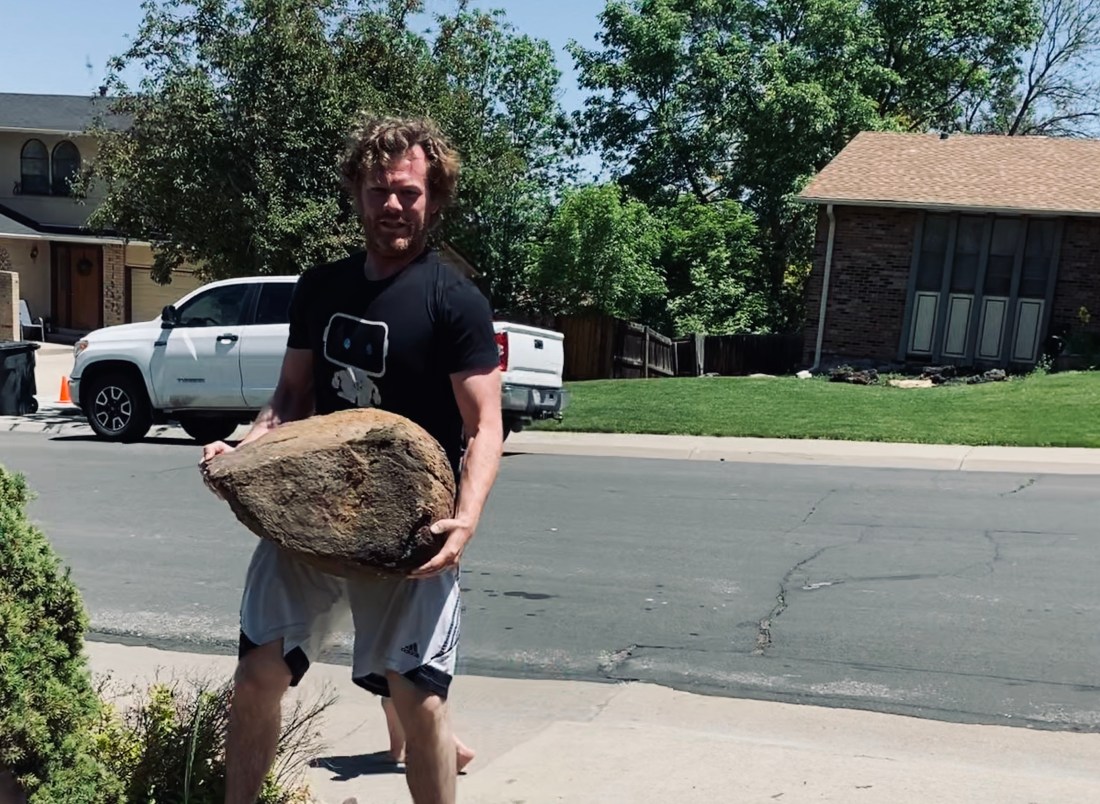
As you all can tell, I’m training to be Arvada’s Strongest Man.*

This picture was taken right before I hoisted this 250kg boulder clear above my head in a clean overhead press.**

Ok, *not really, and **not hardly.

But with my typical workout routine altered during leave, I ended up rekindling a latent enthusiasm (early 90’s World’s Strongest Man competitions, back when I lived in the same country as Magnús Ver Magnússon) and took up deadlifting the rocks in my yard. I mean, if you’re out watching kiddos, what better way to risk splintering your back build strength and stay fit?

I had to adjust, practice, and study weightlifting a bit, since it wasn’t my typical kettlebell/HIIT slaughter. A couple things stood out.

  1. Rocks can be heavy, and they can hurt
  2. Weightlifting tips apply to the autistic experience

Here’s how.

Lifting heavy, not hard. Weightlifting and powerlifting focus on the heavy and the increasingly heavy — not just high-frequency, high-reps. Heavy builds strength. Going hard, not so much. It’s the same with autism, where some of the heavy items aren’t things we can’t do a lot.

I’ll never be able to manage certain large audiences, environments, tasks, even certain people — but over time, I build strength and I don’t wear out. And that’s so I don’t wear out and buckle and start detesting and withdrawing. We can’t just go hard and full bore on situations and with people who drive deep discomfort and anxieties in us, whichever they are. Enduring strength comes from a paced approach.

Low repetitions, greater gains. You build more strength from lifting heavy over fewer repetitions than lifting lighter over many reps. (Are there some cases where the obverse is true? Yep, and give me until the next post, k?) And similarly in my life autistic, I need to pack on the strength (mental, emotional, even physical) to get through the recurrence of some events.

For my neurotypical audience, this can be hard. We might not be able to manage “visit X” or “event Y” as frequently as you do. And that lack of frequency might make you think we don’t ever want to go through XYZ at all.

That’s not entirely it.

Just let us treat it like weightlifting. We can’t overtrain. We’re often trying to build strength. And it isn’t always about trying it light and often. Sometimes it can’t be light. And if it’s heavy, let us do the heavy lifting the right way.