Courage and Autism: Being “A Little More Brave”

IMG_5432.JPG

My oldest daughter started Kindergarten this week. She’d been excited all summer, up until the night before.

“I just want to stay home and be a baby a little bit longer,” she confessed.

I handed her the bottle I was using for Jo, the baby. She demurred. Being a baby doesn’t have the advantages she thinks it does.

But we talked about this transition, this pivotal episode.

I remembered my own first day of Kindergarten, as an undiagnosed autistic boy, whose precociousness and vocabulary would—my parents hoped—account for the myriad social struggles I faced at a young age.

The round, domed classroom had us all in quadrants, each in little collective groups of four, seated together under cold lights cascading harsh on muted colors.

I told Mo the story of how I wasn’t brave. 

The anxiety kicked in early. I was kicked out of preschool at first, so my organized schooling always began auspiciously.

I missed my parents, my routines; the alien environment began to creep into the loose-knit fabrics of my courage and unravel them.

But there was Irene.

Inconsolable.

Irene didn’t seem to be handling this well. I didn’t know her. But she was bawling, crying,   shaking. Her quaking little fear scared me. I didn’t know how to react.

It must have scared the teachers too – she was soon taken out of the class.

“I never saw Irene again,” I told Mo. “I don’t what happened to her. I wasn’t the bravest in my class, and I was just as scared, but I was just a little more brave that day.

A little more brave.

Did I know what I was back in Kindergarten? Did anyone? No.

Did I know I’d be facing some of the first of many challenges in my autistic childhood? No.

Did I ever think I’d share this story to my own future kindergartner? No.

Was I the bravest in this new little world? Hardly.

Mo did great; she’s amazing and far better at life at 5 than I was at 10. Typical neurotypical :p

I’ve come a long way myself — where even as an autistic adult, I don’t aspire to be the most courageous. Because I can’t. Or the most daring. I’d rather not.

So what’s the next best thing, to press up against the worrisome edges of anxious moments, to extend the borders of what I can feel is possible, doable?

Being a little more brave.

Courage is forged in the little things, even if they feel “big.” There’s a lot of little-big things in autism. To learn more about autism from an autistic person’s perspective, follow & subscribe to The Life Autistic here and on YouTube — or follow the more whimsical, spontaneous, and amusing content on Twitter / Instagram. Thanks!
 

Smiles on the Spectrum: Autism and Facial Expressions

IMG_2432.jpg

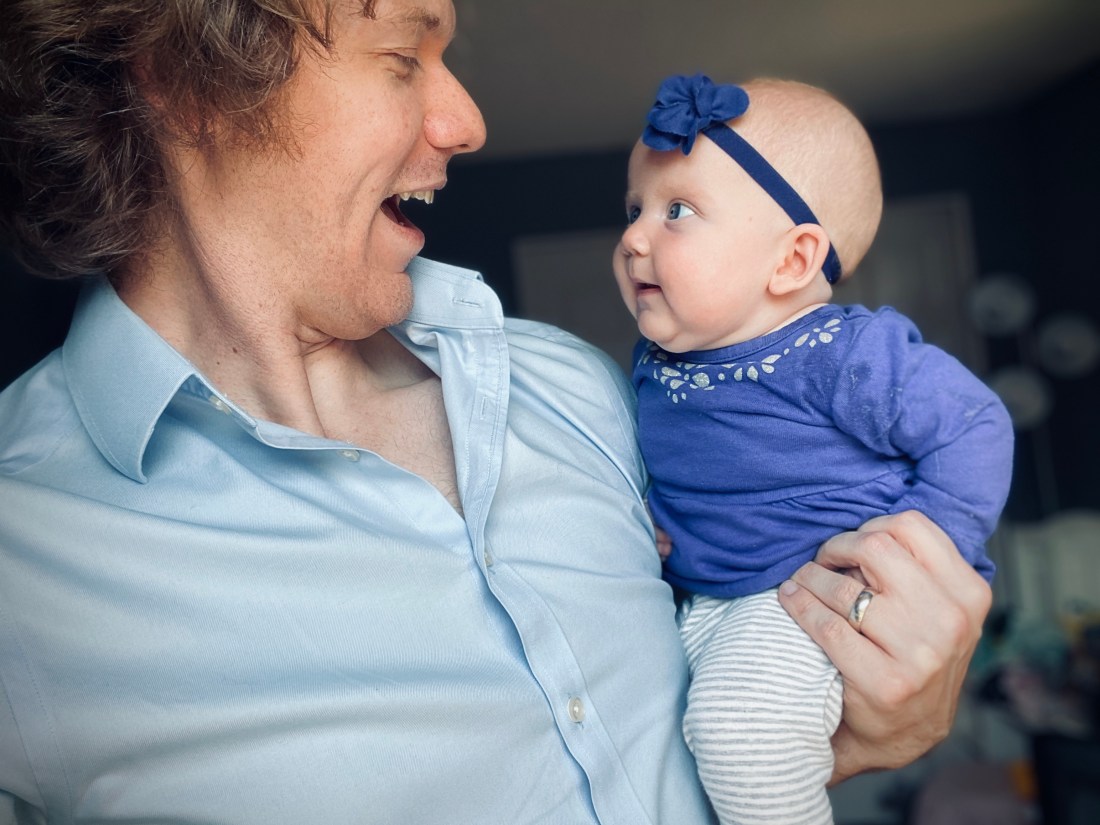
You can tell I’ve been practicing getting my daughter to “smile back.” It’s been a fun exercise, in some cases, literally.

It got me thinking about expressions in general.

People say you can tell if someone’s autistic by their facial expression or by this autistic look that they have.

That’s not really true. 

I’ve fooled plenty of people because they say I don’t look or seem autistic, but aye, if that ain’t another topic.

But since learning more and doing more with expression, I’ve discovered some strange and wonderful things about them and how they intersect with autism.

Speaking of doing more with expression, you should check out my latest episode of The Life Autistic on YouTube for proof!

For starters, smiles are inexpensive and easy. They’re unnatural for me (enough to where I joke on camera about “stop making me smile, it’s hurting my face”) and others like me, but not impossible. The fact that it’s almost always voluntary makes it powerful.

Chris Voss — one of my faves — showcases this in the concept of mirroring, and it’s been like a secret weapon for exerting a little tension on my side to erode it from the other side. So yes, neurotypicals, I’m using your “facial and emotional normality” against you to make my life easier 😉

We don’t always “face express” normally. Apparently, we can have a “facial” disconnect in emotional conveyance. I’ve had to almost practice a sad look, a disappointed look, or whatever other look (other than ‘dumb’) to consciously project that “this is how I’m feeling.”

Hunter, what kind of person has to do that?

Autistic people have to do that.

And it’s hard, because, well, when I screw up, and I feel bad, I don’t always look like I do. So you know how that goes:

“You don’t LOOK sorry.” 

“You SEEM like you’re OK with this.”

That’s hard.

I wish I knew why this was the case: I really don’t. We often come across in our own language and inflective variant, and that may be true in our unspoken communication too.

If you don’t know how we’re feeling, but you care — don’t try to read: ask.

And for what it’s worth: yes, it is fun to give my cheeks some workout to coax a smile out of a baby.

For a former frowner perpetual, I have a lot to smile about these days, even if I have to tell myself “SMILE.” To learn more about autism from an autistic person’s perspective, follow & subscribe to The Life Autistic here and on YouTube — or follow the more whimsical, spontaneous, and amusing content on Twitter / Instagram. Thanks!


Autism Stories from Autistic People – Why It’s Worth the Exhaustion

Screen Shot 2020-08-13 at 6.28.14 AM.png

The first things that come up for me when I start typing in “autism stories” to search

  1. autism stories of hope
  2. autism stories from parents

Both are well and good, but we need more autism stories from autistic people.

To that end, I’ve opened up shop on YouTube and launched my first video, where I cover why it’s critical for us to share more from our unique autistic perspectives. I’d love you welcome you as a subscriber there!

That said, I can see why autistic storytelling is in shorter supply.

IT IS EXHAUSTING. 

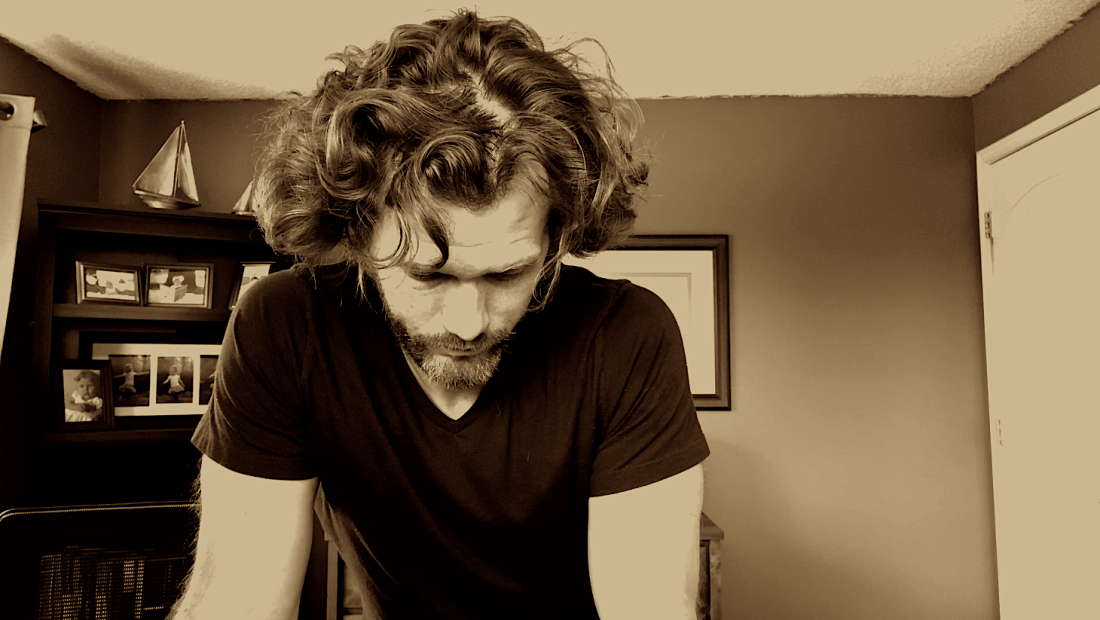
I think I left that above frame in the video, and I didn’t act that one out. I was spent after sitting in front of a camera for 7 to 9 whole minutes, framing what I wanted to say, and front-loading my most expressive self.

IT IS NOT EASY.

So not only am I “keeping my jets on” for camera, I’m contending with those obsessive, OCD-style things that threaten to disappoint and dissuade me from just opting out of this mess altogether.

Did you notice:

  1. I have a loose hair clinging to my goatee, and I noticed it all too late after I was halfway into editing
  2. I said I cried during all three Toy Story films. There are four. (Thanks a lot, Zach Bowders).
  3. The audio that jumps too high when I read off the numbers to the “five things”
  4. At least three cuts that were a millisecond too quick
  5. How I started reaching for my glasses too early to stage the “expert” scenes

It’s normal to pick at your own imperfections, but when you’re both autistic and hyper-self-aware-critical, it’s enough to keep your story from coming out. And then all the “pre-staging” I’m doing to prep for people who don’t like this content or getting my first thumbs down – it’s like I have to check my anxiety cloak at a door that I keep entering and exiting.

IT IS A LOT.

But it’s necessary.

I’ve been super grateful for the kind words and the feedback and the people who think I’m good at editing (thanks 😛 ). And because it’s worth mentioning, I’ve spent years in front of a camera for virtual work meetings, so it’s something I’ve acclimated to. It still gets to be a bit much, but I can do it a little justice in short bursts.

So what now?

If you’re an ally for autistic causes, support your autistic storytellers. I know it’s hard not to share your proximity and your involvement as a parent or significant relation to an autistic loved one, but their voice matters. 

If you’re autistic, share your story. You deserve to. The platform should be yours, ours. 

It’s exhausting effort, but it’s worthwhile. And I’m going to continue doing so here, in writing (my first love and best skill) and on video.

I hope you’ll do and support the same!

I am glad you’re reading this blog! This is my “easy” medium, and it’s nice to use one of my few skills to do good. Video is my “hard” medium, but I’m giving it an earnest go. To learn more about autism from an autistic person’s perspective, follow & subscribe to The Life Autistic here and on YouTube — or follow the more whimsical, spontaneous, and amusing content on Twitter / Instagram. Thanks!