“Greasing the Groove” for Autistic Strength

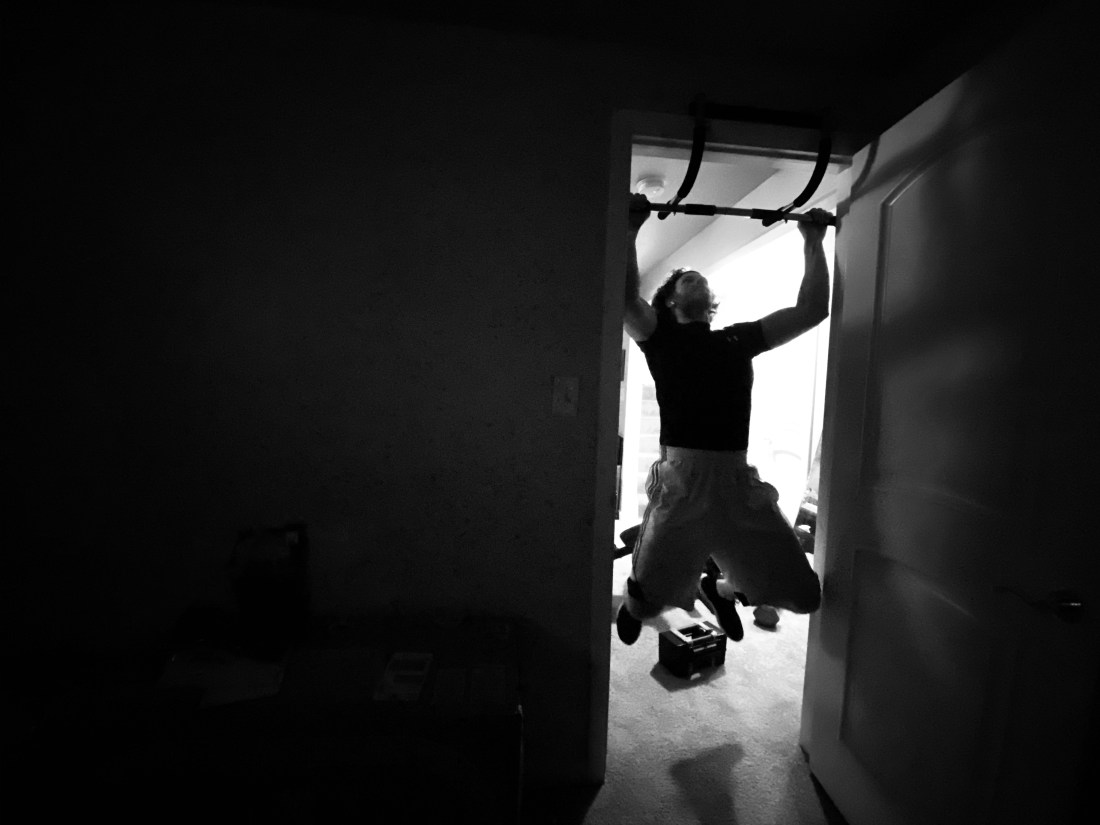
My family holds a pull-up contest every Christmas Day. I’ve never won.  Last year, I only cranked out four and embarrassed myself. The most pull-ups anyone has done to win was ten.

This year, I’ll be doubling that and embarrassing everyone else instead.

If there’s a “one easy trick” gimmick, it’s this:

If you want to get better at something, do it more.

Yes, I know, I literally said sort of the opposite.

Before you read any further and get this confused for some flabby rando’s barely-passable exercise blog — remember, we’re talking The Life Autistic. I’m trying to figure this all out and do my best, and part of that is figuring other things out.

Like ‘greasing the groove.’

If you want the explanations, read Pavel Tsatsouline’s hilarious primer or this Art of Manliness adaptation.

Either way, I realized I’d been doing this since before I learned about doing this.

There’s a way to grease the groove and build strength in your autistic experience.

These days, I can handle public speaking. All day training sessions. Long trips to the grocery store. Leading and hosting meetings back to back. Making phone calls.

I don’t possess the innate autistic strength to manage those. It came over time. It took a little bravery. Some of it was doable. Some of it I’m still daunted by — especially when it comes to visiting people, having guests, or even doing meals (which I enjoy) with people I don’t know.

But sometimes you can grease that groove. Starting slow. Jumping on video. Saying hello. Trying to hold a two sentence conversation with a stranger. Practicing a fun introduction to yourself.

Some of the hard things in the Life Autistic just remain hard; they’re heavy, and I only attack them every so often to better handle them.

Other things need more frequency, and while they’re not always easy, they’re not the heaviest things — there’s a groove I feel I can build here. Maybe you can, maybe you can’t — whatever, be you!

If anything, I know what I’m going to be: The 2020 Hansen Family Christmas Pull-Up Contest Winner.


Autism, Inclusion, and Diversity: Go Beyond Being an Ally

IMG_1332.jpg

It’s OK to be an ally. But it’s hard to do.

Because it’s hard to define.

In America and across the world, we’ve seen a surge in allyship for and with Black Americans in the face of racially-tinged injustices, both recently inflamed and those long-ongoing and overdue for change.

Many of us have stood up and out and declared ourselves allies.

But how do I go from “being” an ally to “taking action?” 

If it’s not obvious, I haven’t lived the Black experience — just the autistic one. And this isn’t me saying “hey, autistic people need your allyship too – over here!” 

But being an ally and doing what allies do — it is not a zero sum game. It benefits all people, groups, and people groups who can benefit from your influence, reputation, and advocacy – both neurotypical and neurodiverse.

Where can you start?

Learn. Don’t lean solely on us to teach! Do the work. Read. Find resources. Don’t just hear – listen. And, while you mean well, don’t use proximity as a replacement. Just because you have “that one autistic acquaintance” or have autistic children doesn’t quite replace the need to gain perspective on other person or group’s experience, perspective, and even history.

Speak up. Notice I didn’t say “speak,” because we don’t need people to speak for us, but rather in support of us. We don’t always have “the conch” of speaking, of opinion, or influence. But if you do, use that privilege. I’m one of the more vocal autistic people you’ll meet — unless I feel like I’m too different from the group. And that’s not just an autistic thing. Invite our opinion. Revisit our ideas. Make it easy for us to volunteer thought, especially when it goes against the collective grain.

Engage. From an autistic standpoint, our needs for inclusivity differ. For example, I might balk at someone’s well-intentioned-but-ill-advised attempt to shoehorn me into a presentation or project because “I’ll bring something different.” Allyship isn’t about knowing what’s best for someone, it’s engaging people thoughtfully, knowing that our needs are on our terms, not necessarily yours. Sometimes we’re good! Sometimes we are not. It’s OK to read the room, to ask, to let us share how you can help — or sometimes understanding where you can’t.

This isn’t just for autistic people. This is for your black co-workers. Your Hispanic acquaintances. Your gay neighbors. Those with disabilities. People.

Go beyond just being an ally. Go do. 


The Life Autistic: Stand and Deliver

This last week I had one of the most intense, searching, and revelatory experiences of my professional life.

EXECUTIVE PRESENTATION TRAINING

Even for you neurotpyical folks, this would have been a daunting ask. Getting each “uhm” clipped, every extra qualifier pounced upon.

For me, I knew what was coming.

I’ve polished my “presenting version” of Hunter Hansen down to where there’s only one thing left to refine.

Me.

I’ve cut out all the big words when I need to present to directors, leaders, etc.

I don’t ramble in circumlocutionary, concentric circles of narrative excess.

But eye contact?

Oh man, if I had a nickel for every time I was reminded to keep my eyes up, eyes down, eyes on the audience, I’d have a lot of nickels.

It’s so hard for me.

It’s like I need a BREAK, because I can only hold a gaze while speaking for so long.

And I almost need a stopping point to look away and “download more content.”

It’s a lot to process!

*But before any of you would cry foul here or think this is some attempt to change part of what makes Hunter, Hunter*

Here’s why I was given that advice.

I’m extremely expressive.

Apparently my face alone does so well to read, reflect, and react to an audience that it draws people in.

And it’s good enough to where I shouldn’t kick them out.

Imagine that. Young H2 would never have believed I was in any way captivating.

In fact, I was told I couldn’t Botox my forehead because of it.

In the end, I was happy. Exhausted, but happy.

The best piece of advice I got?

“Stop performing and just be you.”

Ok, I’ll be me.

You ready?