
The Life Autistic: Working for a Boss on the Spectrum

11393591_10153349996547246_2339323436093048714_o.jpg

You should watch this story on video instead. It’s 125% more entertaining and informative. Trust me!

(If you found this post via a web search – welcome to The Life Autistic! You’re one step closer to regularly discovering more about autism from a uniquely autistic perspective. Please consider subscribing via email, on YouTube, or following on Twitter / Instagram. Thanks so much!)

Having an autistic co-worker is one thing, and it’s probably a more common experience than you may think.

But what if it’s your boss?

I spent years of my Apple career in management. People management. Actual, living human people.

Not only that, but I went from managing employees directly to managing their managers, with a business unit of over 115 awesome front-line agents and six stellar team managers. I was a bona-fide organizational leader.

I found my footing in the role, and I feel I did well for my people and their people. Before you shake your head and wonder “What the heck was Apple thinking?” — mind you, I wasn’t bad at the gig!

But I was different. 

And if you have one of those “different” bosses like me, here’s a few things I’d like you to know:

1) We care, even if we have trouble showing it

Expression doesn’t always come naturally to us, but that doesn’t mean it isn’t there. I had to make reminders to thank my people and highlight their work – otherwise I’d get lost in observing work and fail to recognize the worker.

2) We’re cyborgs, not robots

Routine and ritual are our R&R – if we’re in management, it’s because we’ve likely made the best use of rigid actions and processes to get things done well. Don’t let that intimidate you – we’re just wired that way.

3) Bring a dictionary and a cushion for conversations

If your boss is anything like me, he or she may have affinity for labyrinthine conversations, extended analogies, prolix prosody, and extended stays in the forges of rhetorical wordsmithing. Apologies in advancewe’re honestly not trying to confuse you!

4) . . . or, get ready for blunt feedback

Mind you, we’re not talking “brutal” or “hurtful” – being direct and to-the-point isn’t because we’re malicious. We just don’t always catch the emotional impact of our words. Sometimes our tone is off, sometimes it’s a statement of fact in our minds and nothing more. I’m still working on handling it gracefully.

5) Find the positives

I wasn’t a perfect manager. Most aren’t.

If your manager is genuinely on the autism spectrum, they’re bringing a different mix of imperfections.

They may bring some commanding strengths, too.

Attention to detail. Intense focus. Unassailable determination. Unflinching support. A cool head. A keen eye on your work and ideas to make it better.

It’s a different experience.

And if it’s your experience – I do hope it’s the good kind of different.

For more, check out The Life Autistic YouTube episode on this topic! Hope it helps.

The Life Autistic: Can Empathy Be Learned?

474771_10150772373237246_415136011_o.jpg

Almost ten years ago, I began my Apple career as an iPhone Advisor.

It was my first customer service job, in a call center, taking phone calls from strangers, and de-escalating people while I solved their technical (and sometimes personal) issues.

I look through all those elements of my job through The Life Autistic lens; frankly, I don’t know how I managed!

The job required a thing that would make or break one’s success.

Empathy.

*gulp*

Of course I knew about empathy. I mean, I had the dictionary definition on hand, along with plenty of analogies to describe what it meant, how it related, why it applied to the work.

How was I supposed to learn something I couldn’t always feel?

I knew I couldn’t be reborn as a natural empath. I didn’t have the capacity to program myself that way for the job.

But I did have my own attributes that would help. Puzzle-solving. Hyper-competitiveness. Pattern recognition. 

I’ll fast forward the story a bit and admit that I didn’t learn empathy.

Instead, I practiced and perfected empathic response. 

It took some doing, being able to listen, hear, and read into the core of customer concerns, to frame the why behind the what of their tech issue. I made it an art, to turn those stated and unstated concerns back into a response that more or less said “I feel ya.” 

Not every situation called for it, and I more than once maybe tried too hard, to my embarrassment. But it didn’t matter.

What did matter is that I had to do it. I wanted to be the best at the job. I could still come in as Hunter and take calls as H2.

It was and still is unusual to me, operating in a language that I don’t often think and rarely feel.

But then, sometimes, people will respond back.

“Exactly – you know what I mean, don’t you?”

“I know, right? You get it.”

“YES! I, you, you understand just what I’m going through.”

And then it’s like . . . I do feel it.

I don’t ‘get’ empathy. Not until I give it first. 


The Life Autistic: Only I Could Have Gotten This One Word in a Performance Review

102699917-159836292.jpg

When I saw the word, I laughed. Out loud. In the middle of my review.

“I’m sorry,” I told my boss. “I said I wouldn’t read ahead to the feedback. But this — it’s too true.”

I’m fortunate to get a performance review every year, which assesses my work and includes feedback from my peers, co-workers, and clients.

I say fortunate, because I’m optimistic; these past few years have been a bit tougher on me.

I made a career switch to something that would test me differently, leaving behind a decent run in middle management, where most everyone seemed to appreciate me, people respected my work, and leadership threw me a ton of money.

I gave that up because I needed a different challenge.

And it has been a challenge — a humbling one at that.

I pivoted to an area where I started from scratch, needing to build my skills, connections, and clout all over again.

Expertise and experience take work. My reviews from years back were like annual coronations of that effort, while now they’ve been more building blocks and stepping stones in my current career.

This year, though, amidst half-decent feedback and kind commentary, one phrase stood out:

“Hunter tends to be a bit obtuse in his analogies…”

OBTUSE!

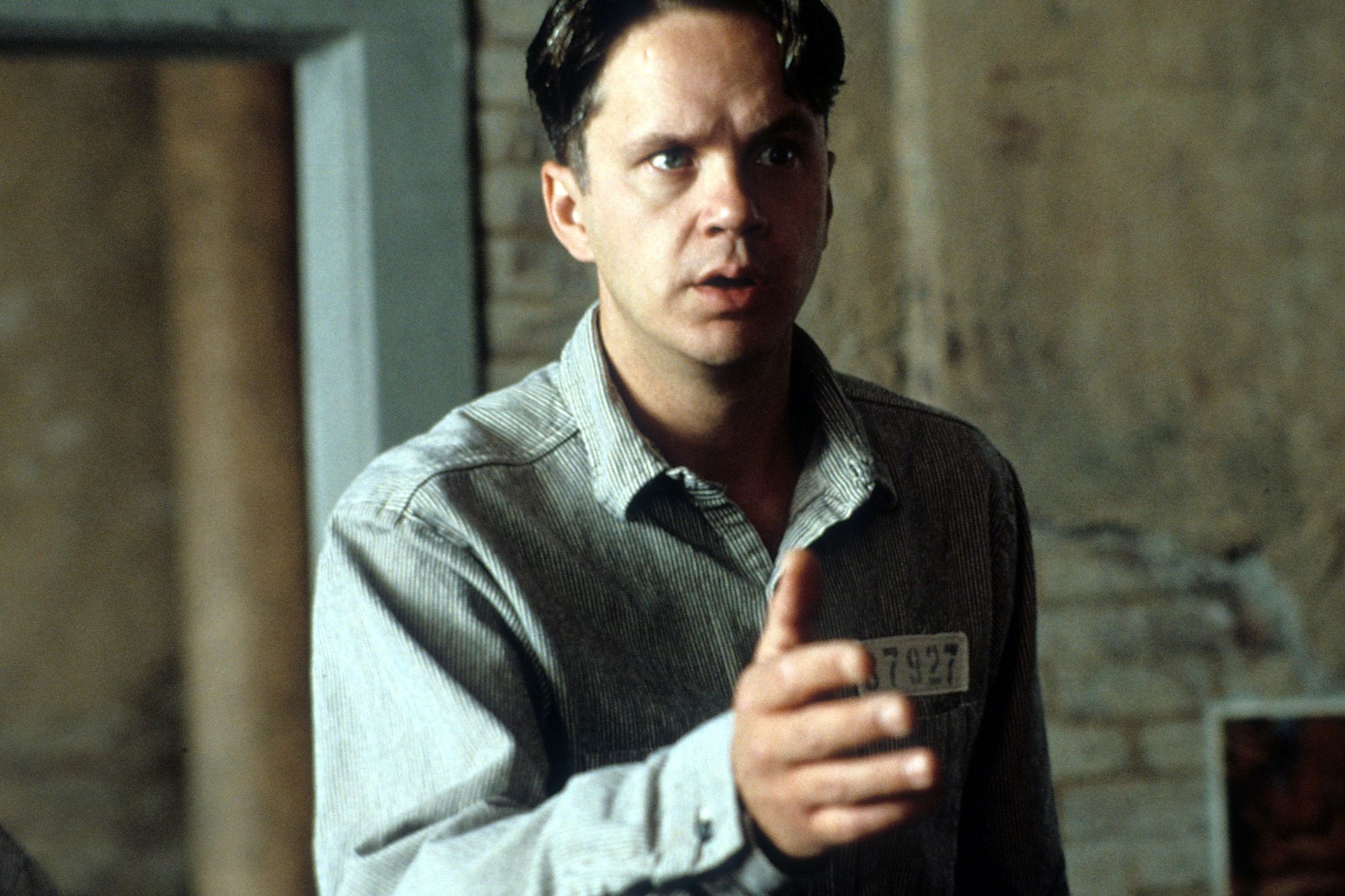
Unlike the Warden in Shawshank, I got the connotation straight away. I wasn’t mad – that’s a brilliant word! That takes English dexterity, a connoisseur’s word, one that I appreciated.

Obtuse wasn’t just deliberate. It’s just me.

The rest of the comment was positive, but ‘obtuse’ rang as an unassailable attribute, something that typifies me as much as redheadedness.

It was my worst review in years, relatively speaking. It’s a newer gig to me.

But that’s ok.

I’m going to try harder things. I’m going to get good enough to have a chance to be bad at something even more difficult.

Though my stories, analogies, and communication might have obtuse angles, there’s one angle I hang onto that helps most of all:

Positive.