The Life Autistic: Learning to Drive (or “Quit Planning, Start Doing”)

215602_4958732245_6649_n.jpg

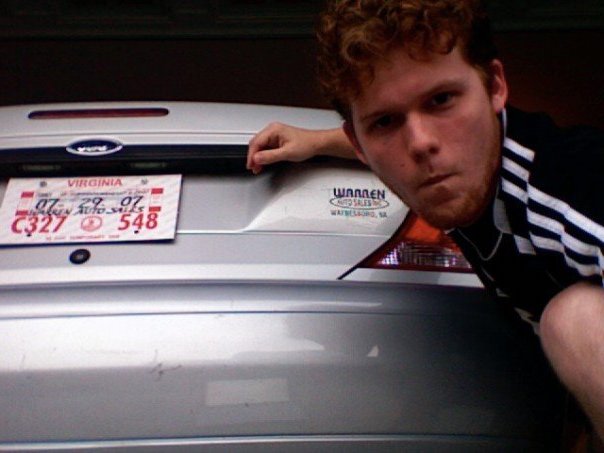
“Hey Hunter, we’re going to get your learner’s permit — now.”

And that’s how I learned to drive. The End.

Let me put this story in Reverse for a quick second.

During a trip from Iceland back to the US, my parents thought it’d be a good idea for me to study up for a driving test. I was 15, and the thought was that I’d eventually get around to needing a car, driving ability, all the essentials.

I wasn’t going to be able to do much once we got back to Iceland, but at least I could cram for when I returned to the states for college in a couple of years.

But nope. 

Either Mom got antsy, or there was some kind of discount being offered for learner’s permits, but with almost zero notice, I was hustled to Waynesboro, Virginia’s eight circle of Hell known as the DMV.

Yeah, there’s a more suspenseful story here, where I missed my maximum number of questions and had to guess my way through the last five, but lemme zoom out to the moral of the story:

I’ve done a lot by being pushed to do.

It goes against 95% of the very fibers of my autistic being. My careful planning. My hedging against risk. My detailed preparation. My manifold situational calculations.

Those skills have served me well, in interviews, tests, speeches — you name it. If I can plan it, I can (usually) ace it.

But that’s only if I get around to doing it.

The Life Autistic is a balancing act, where all that analysis leads to paralysis. My best laid plans were often just that: plans.

Getting over the anxiety to do is the toughest part of the plan.

And yeah, I prefer when I can pull that trigger myself.

But I know me. I’m not the quickest to act even in my own interest.

Sometimes it takes a “50% Learner’s Permits – TODAY ONLY” deal to drive it.


The Life Autistic: You Can’t Really be Autistic, because . . .

Screen Shot 2018-09-14 at 2.46.35 PM.png

Hunter, you can’t really be autistic. 

You moved out.

You have a decent job.

You actually got married — and you married up!

People laugh at your jokes. Ok, some of them.

You actually do alright in social situations.

You seem to hold your own in conversations.

There’s those big words you use, but that’s, well, you just like books.

You talk. A lot.

You at least have an idea of empathizing.

You’re, I guess you could say ‘almost’ normal?

Folks, I’ve had close to 20 years since I found out I was autistic.  And I’ve known I was different long before that.

Time. Experience. Practice. Mistakes. Correction.

There are aspects of who I am, who we are, that won’t change.

I’ve not gotten less autistic.

I’ve just had time to work long and hard on adapting, adjusting, keeping up appearances, functioning.

The Life Autistic: When I Finally Learned My Lesson about Achievement

cc7b9afb-595a-4330-9144-4df521336168.jpeg

This is a somber one. Strap in.

My daughter just started Awana clubs last week, a kind of club in which my memories weren’t as terrible, personally.

For me, Awana was a great vehicle to show off my memorization talents, my prodigious recall, and my competitive fire.

One month, I’d rattled off a record number of Bible verses, blitzed through half of my Pioneer workbook, and set a speed record in a baton race — it was an MVP kind of month, and I felt GREAT about it.

So as the Awana commander began with “And our Pioneer of the Month award . . .”, I’d tuned out, bowed my head, and braced for my name to be called.

Ryan Shelley!”

Wait, Ryan? 

Did they get the wrong name? How hard is it to confuse Hunter for Ryan?

“But I said more verses this month!” I exclaimed, a petulant declaration lost in the milieu as Ryan collected his award and was feted by my fellow Pioneers.

By this point in my life (5th grade), I was used to not winning, so I did my best to brush it off.

Fast forward to a post-Awana dinner break, where my Awana leader, Mr. Stein, called me over.

It was just the two of us. I remember him eating some sort of egg sandwich and thinking how much I wouldn’t have liked that compared to my mushy PB&J.

Hunter,” he said. Would you like to know why you didn’t win Pioneer of the Month?”

Being the know-it-all and curious cat all at once, I was still flummoxed as to the reason, but I decided to hear him out.

“Think back to what you said when you didn’t win.”

I remembered. Quite clearly. Still do.

It’s not just about who says the most verses or does the most in their workbook, Hunter. It’s more than that. It’s about humility. It’s about helping. Not just doing the most, but doing the most for the others around you.”

[I’m paraphrasing here, and it’s killing me, because I wish I remembered this exactly.]

This was a time when my autistic eyes were taken outside of the black and white and into color. Mr. Stein was right, and he was trying to help. 

Folks, I dunno about you, but I still hold onto this advice, even when I struggle to do so. It’s easier for me to see and to judge achievement in black and white terms, like raw output, insane work, and sheer grit. I have to squint through my autistic lens to see clearly.

The lesson he taught me is one that I need to ensure lives on, because I’m still here to share it.

Lt. Col John Stein was killed in action  only a few years after, in a mission to rescue injured children in Afghanistan.

I didn’t know about that latter fact until writing this post – and it brings tears to my eyes to see some symmetry there.

He died trying to save kids; he also lived to serve them.

Even if it was just something as small as steering a ‘different’ kid into seeing success through more than just yourself.