The Life Autistic: Lying Scoutmasters, Numbers, and Cakewalks – Why I Soured on Boy Scouts

Screen Shot 2018-09-08 at 2.43.45 PM.png

The most enduring lessons I learned from Boy Scouts: Buy Your Own Cake, People Don’t Want You to Win, and Don’t Trust Scout Leaders

“Whoa, dang, H2 – what kind of scouting was this?”

I couldn’t tell ya, but my experience with Troop 666 in Fairfax, VA turned me off of scouting and left me with smarting observations on how I felt I was different.

Mind you, I was 7. I only had the world half-solved by then.

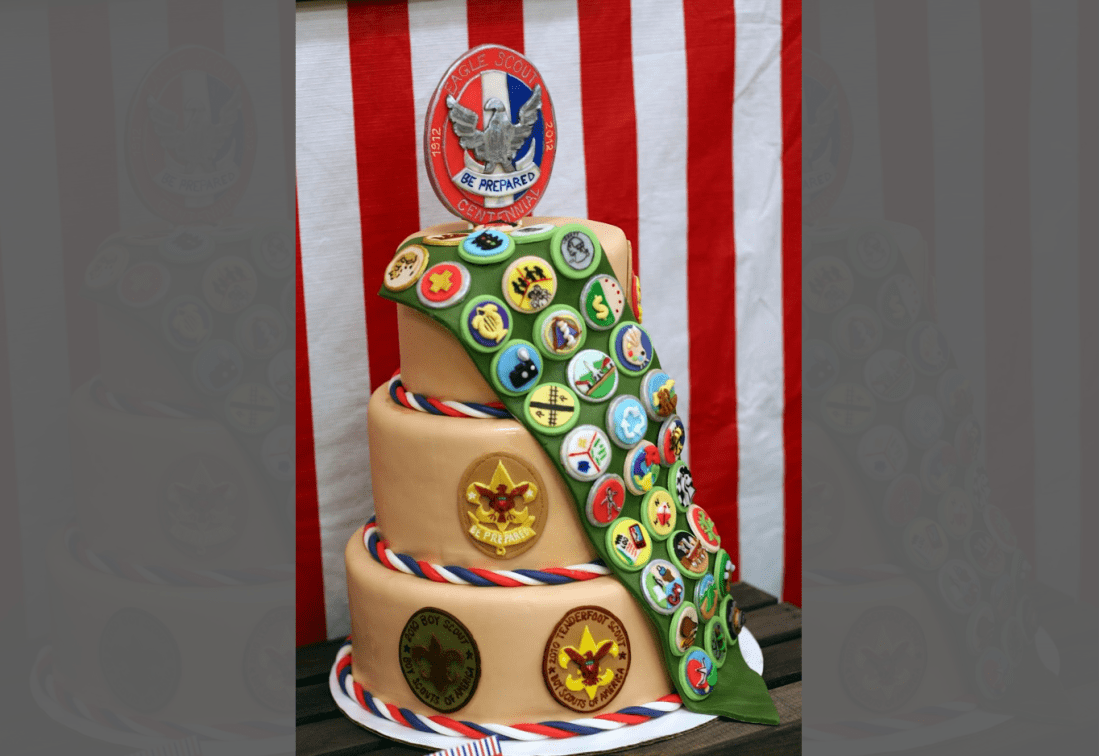
Let’s talk about the cake walk. Why this was a Boy Scout thing, I don’t know. The mechanics remain fuzzy, but I remember the important components: scouts got a number, a number got called, a scout wins a cake.

I never won. 

To a normal seven-year-old, that’s just a way of life.

But in the life autistic, not winning is yet another reinforcement of difference, of inadequacy. Normal kids win. Kids like me don’t.

That is, until one week, the auctioneer bellowed out “NUMBER SIX!”

6.

6.

6!

I dashed up to the Scout Master, furnishing my card that said 6. The number six. It looks like this: 6.

He didn’t seem to notice me at first, which was odd, but I managed to get his attention – also odd, given that they were, uh, looking for claimants to these cake prizes and all.

“Oh ho ho,” he cackled, flipping my card this way and that. “This is, uh, it’s a 9. Sorry kid — it’s a NINE!” 

9.

9?

No, it was not a—

I didn’t have the courage to correct him, since everyone was laughing me off, as if no one could possibly confuse a 6 for a 9.

Which, I didn’t.

I had the number. Again, I wasn’t the type to have the kind of confidence to go out there and be wrong. That’s not me. 

Sulking away, I looked up at my other troop leaders for support, and . . . nothing.

On the face of it, this is kind of a dumb, pitiful story. It really is. People sell cakes. People make mistakes.

I didn’t know I was autistic back then, but I knew I was different. My scouting experience  cemented this even further.

Normal kids get to win, get the benefit of the doubt, and get support.

I just wanted a chance to be normal that night.


The Life Autistic: Bridge Building & Lessons in Risk

92353f0119855ece96529c2fc9089547.jpg

In my short elementary school years at A.T. Mahan in Keflavik, Iceland, I was ‘selected’ for their Talented & Gifted class. I don’t know how they came to their selections, but given my entry, they must have been pretty lax that year.

One of the class projects stood out: Bridge Building

We were given our raw materials (toothpicks, glue, paint), budget, and some architectural guidance (“Use lots of triangles!”). After we were finished, our bridges would be judged on their design, fiscal discipline, and strength.

I constructed mine with meticulous, exacting care, decking it in red and blue as if it were some causeway of American patriotism. Across the table was another team, lamenting their need to rebuild a section of their bridge.

It was then that our teacher, Mr. Feige, dispensed an important anecdote:

“We once had a team who had to rebuild their entire bridge. And even though it went over budget, it was the strongest bridge we’ve ever tested!”

Did you catch all the important lessons there?

I sure didn’t.

Judgement Day arrived, and all our bridges were up for judging – and of course, the fun part, seeing how much weight they’d support.

The other teams tested their bridges to the absolute maximum, wrecking them in spectacular fashion.

When it came to my bridge, it held about 5 pounds, buckling quickly.

I stopped there.

I could have kept going. Could have risked a little more. But I didn’t.

In the end, my bridge didn’t win a prize for being the best looking, or the most fiscally sound, or the strongest. But I did have one takeaway the others didn’t.

I took my bridge home, intact.

So, what’s the lesson?

In my life autistic, I’ve learned that I toe a fine line between confidence and caution. Even recently, I found myself plugging in directions, even though I’ve done the drives dozens of times. I’m not as quick to get places, but I’m also not getting lost.

Sure, I could have out-designed and budgeted better to at least win the “smart” way, or I could have wrecked my bridge and set a new strength record.

But I know myself: rarely first, rarely worst. My bridges don’t win contests, but they do stay standing in the end.

The Life Autistic: Why my ‘Space’ is a Fortress

Screen Shot 2018-08-29 at 7.44.46 AM.png

I’ve been on a business trip all this week, doing what I’d imagine many of my fellow autists and Aspies may dread: working with a lot of real-live people all day.

For a dude who works remotely 95% of the time, this is a big deal. I travel once a quarter, mainly because it takes me that long to recharge in between trips to see and work with my awesome co-workers and extended peers in person.

It’s fun, but it is exhausting. 

But I did have an interesting self-revelation last night. As one of my friends left with me, he graced many folks with parting hug. I had to suppress a small smirk as I prepped to leave as well.

I joked about having a “hugs quota” that I’d exceeded for the day.

Someone asked: “Ah, so you have kind of a space bubble?”

I had to think both thoughtfully and fast, neither of which I do well on their own.

“Well, it’s more like a fortress.”

That right there is a fair assessment of how I feel about space. Here’s why:

A fortress is a defensive bulwark.

While I sometimes wish I were more forward, you’ll find that I’m never intrusive, not even by accident. Steadiness and steadfastness are great byproducts.

A fortress doesn’t pop. 

Bubbles don’t have the kind of permanence that I carry; it’s a stronger force, a lot more obvious – sometimes disinviting, but never surprising.

A fortress has an entry.

I’m most at peace with this one. I’m not closed. I’ve got a few arches, edifices, some cool design features – but despite the walls both high and wide, I can still control the gate.