The Life Autistic: When I Finally Learned My Lesson about Achievement

cc7b9afb-595a-4330-9144-4df521336168.jpeg

This is a somber one. Strap in.

My daughter just started Awana clubs last week, a kind of club in which my memories weren’t as terrible, personally.

For me, Awana was a great vehicle to show off my memorization talents, my prodigious recall, and my competitive fire.

One month, I’d rattled off a record number of Bible verses, blitzed through half of my Pioneer workbook, and set a speed record in a baton race — it was an MVP kind of month, and I felt GREAT about it.

So as the Awana commander began with “And our Pioneer of the Month award . . .”, I’d tuned out, bowed my head, and braced for my name to be called.

Ryan Shelley!”

Wait, Ryan? 

Did they get the wrong name? How hard is it to confuse Hunter for Ryan?

“But I said more verses this month!” I exclaimed, a petulant declaration lost in the milieu as Ryan collected his award and was feted by my fellow Pioneers.

By this point in my life (5th grade), I was used to not winning, so I did my best to brush it off.

Fast forward to a post-Awana dinner break, where my Awana leader, Mr. Stein, called me over.

It was just the two of us. I remember him eating some sort of egg sandwich and thinking how much I wouldn’t have liked that compared to my mushy PB&J.

Hunter,” he said. Would you like to know why you didn’t win Pioneer of the Month?”

Being the know-it-all and curious cat all at once, I was still flummoxed as to the reason, but I decided to hear him out.

“Think back to what you said when you didn’t win.”

I remembered. Quite clearly. Still do.

It’s not just about who says the most verses or does the most in their workbook, Hunter. It’s more than that. It’s about humility. It’s about helping. Not just doing the most, but doing the most for the others around you.”

[I’m paraphrasing here, and it’s killing me, because I wish I remembered this exactly.]

This was a time when my autistic eyes were taken outside of the black and white and into color. Mr. Stein was right, and he was trying to help. 

Folks, I dunno about you, but I still hold onto this advice, even when I struggle to do so. It’s easier for me to see and to judge achievement in black and white terms, like raw output, insane work, and sheer grit. I have to squint through my autistic lens to see clearly.

The lesson he taught me is one that I need to ensure lives on, because I’m still here to share it.

Lt. Col John Stein was killed in action  only a few years after, in a mission to rescue injured children in Afghanistan.

I didn’t know about that latter fact until writing this post – and it brings tears to my eyes to see some symmetry there.

He died trying to save kids; he also lived to serve them.

Even if it was just something as small as steering a ‘different’ kid into seeing success through more than just yourself.
The Life Autistic: Lying Scoutmasters, Numbers, and Cakewalks – Why I Soured on Boy Scouts

Screen Shot 2018-09-08 at 2.43.45 PM.png

The most enduring lessons I learned from Boy Scouts: Buy Your Own Cake, People Don’t Want You to Win, and Don’t Trust Scout Leaders

“Whoa, dang, H2 – what kind of scouting was this?”

I couldn’t tell ya, but my experience with Troop 666 in Fairfax, VA turned me off of scouting and left me with smarting observations on how I felt I was different.

Mind you, I was 7. I only had the world half-solved by then.

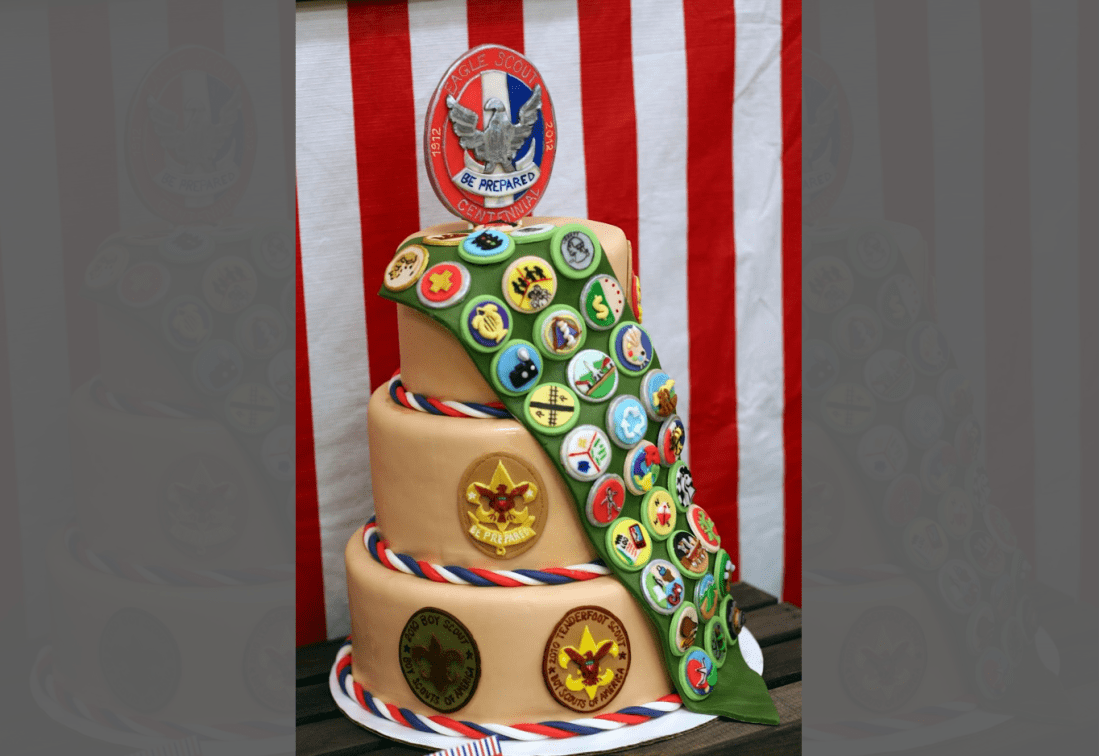
Let’s talk about the cake walk. Why this was a Boy Scout thing, I don’t know. The mechanics remain fuzzy, but I remember the important components: scouts got a number, a number got called, a scout wins a cake.

I never won. 

To a normal seven-year-old, that’s just a way of life.

But in the life autistic, not winning is yet another reinforcement of difference, of inadequacy. Normal kids win. Kids like me don’t.

That is, until one week, the auctioneer bellowed out “NUMBER SIX!”

6.

6.

6!

I dashed up to the Scout Master, furnishing my card that said 6. The number six. It looks like this: 6.

He didn’t seem to notice me at first, which was odd, but I managed to get his attention – also odd, given that they were, uh, looking for claimants to these cake prizes and all.

“Oh ho ho,” he cackled, flipping my card this way and that. “This is, uh, it’s a 9. Sorry kid — it’s a NINE!” 

9.

9?

No, it was not a—

I didn’t have the courage to correct him, since everyone was laughing me off, as if no one could possibly confuse a 6 for a 9.

Which, I didn’t.

I had the number. Again, I wasn’t the type to have the kind of confidence to go out there and be wrong. That’s not me. 

Sulking away, I looked up at my other troop leaders for support, and . . . nothing.

On the face of it, this is kind of a dumb, pitiful story. It really is. People sell cakes. People make mistakes.

I didn’t know I was autistic back then, but I knew I was different. My scouting experience  cemented this even further.

Normal kids get to win, get the benefit of the doubt, and get support.

I just wanted a chance to be normal that night.


The Life Autistic: Why my ‘Space’ is a Fortress

Screen Shot 2018-08-29 at 7.44.46 AM.png

I’ve been on a business trip all this week, doing what I’d imagine many of my fellow autists and Aspies may dread: working with a lot of real-live people all day.

For a dude who works remotely 95% of the time, this is a big deal. I travel once a quarter, mainly because it takes me that long to recharge in between trips to see and work with my awesome co-workers and extended peers in person.

It’s fun, but it is exhausting. 

But I did have an interesting self-revelation last night. As one of my friends left with me, he graced many folks with parting hug. I had to suppress a small smirk as I prepped to leave as well.

I joked about having a “hugs quota” that I’d exceeded for the day.

Someone asked: “Ah, so you have kind of a space bubble?”

I had to think both thoughtfully and fast, neither of which I do well on their own.

“Well, it’s more like a fortress.”

That right there is a fair assessment of how I feel about space. Here’s why:

A fortress is a defensive bulwark.

While I sometimes wish I were more forward, you’ll find that I’m never intrusive, not even by accident. Steadiness and steadfastness are great byproducts.

A fortress doesn’t pop. 

Bubbles don’t have the kind of permanence that I carry; it’s a stronger force, a lot more obvious – sometimes disinviting, but never surprising.

A fortress has an entry.

I’m most at peace with this one. I’m not closed. I’ve got a few arches, edifices, some cool design features – but despite the walls both high and wide, I can still control the gate.